Let’s be honest: almost every year, the electronics manufacturing industry seems to face a new “material shortage” story. In 2021, it was component shortages. In the years that followed, freight costs, copper prices, resin supply, and specialty substrates each took turns becoming the pressure point in the supply chain.
So when the market starts talking about another “PCB material shortage,” the first reaction from many teams is understandable: is this just another short-term price hike? Are suppliers simply creating a sense of urgency?
But 2026 looks different.
This time, the issue is not only that one material has become more expensive or that one supplier has extended lead times. AI server demand is pushing high-end PCB materials into a tighter supply environment, while the availability of glass fabric, resin, CCL, and other upstream materials has become harder to predict.
For engineering and sourcing teams, the real question is no longer only “How much more will this board cost?” It is whether the selected stackup, laminate, and material grade can still be sourced within the project’s required production window.
This is not simply a supplier-made narrative. Since the start of 2026, several market signals have pointed in the same direction: upstream materials for high-end PCBs are becoming more expensive and less predictable.
The first signal is CCL pricing. According to Korea Customs Service data cited by Hankyung and TrendForce, Korean CCL import prices reached $20,728 per tonne in March 2026, up 74.5% from $11,880 per tonne a year earlier. TrendForce noted that this was the first time since records began in 2000 that Korean CCL import prices had exceeded $20,000 per tonne.
The pressure is also moving downstream into PCB pricing. Reuters reported that Goldman Sachs analysts saw PCB prices rise by as much as 40% in April from March levels. In the same report, a senior executive at South Korean PCB manufacturer Daeduck Electronics said waiting times for chemical materials such as epoxy resin had stretched from three weeks to fifteen.
The squeeze is not limited to resin. TrendForce reports that glass fabric, copper foil, and resin account for roughly 19%, 42%, and 26% of CCL cost, respectively. That means when glass fabric, copper foil, and resin face price pressure or tighter supply at the same time, the impact can quickly move into laminate pricing, PCB quotations, and delivery schedules.
AI infrastructure demand is one of the key drivers behind this pressure. TrendForce insights reports that high-end glass fiber cloth is increasingly used in AI chip substrates, AI server motherboards, UBBs, OAMs, switches, and routers. As AI server transmission rates rise and PCB layer counts increase, demand is also rising for higher-grade glass materials such as Low-Dk and Low-CTE glass fabric.
Supply-side flexibility is limited. TrendForce reports that Japan’s Nittobo holds approximately 90% global share in Low-CTE T-glass and about 60%–70% global share in Low-Dk NER-glass. Although capacity expansion plans are underway, newly installed equipment still needs time to reach stable yield, so meaningful supply relief may not arrive quickly.
The market data shows that PCB material pressure in 2026 is real. But PCBCool does not believe engineering and sourcing teams need to treat every PCB project with the same level of concern. This material squeeze will not affect all products in the same way.
For conventional double-sided boards, standard FR-4 control boards, and low-speed products with flexible material options, the impact may be relatively limited. In many cases, the main pressure will appear in quote validity, price movement, or delivery confirmation.
The projects that deserve closer attention are those that depend heavily on material grade, electrical performance, customer approval, or tight delivery windows.
Based on PCBCool’s purchasing team’s review of recent PCB material conditions, project risk can be assessed through the following dimensions:
In a normal market, a DFM issue may mean one more revision and a few extra days. In a constrained material market, a DFM issue can mean missing the current production window — and the next opening may be weeks away.
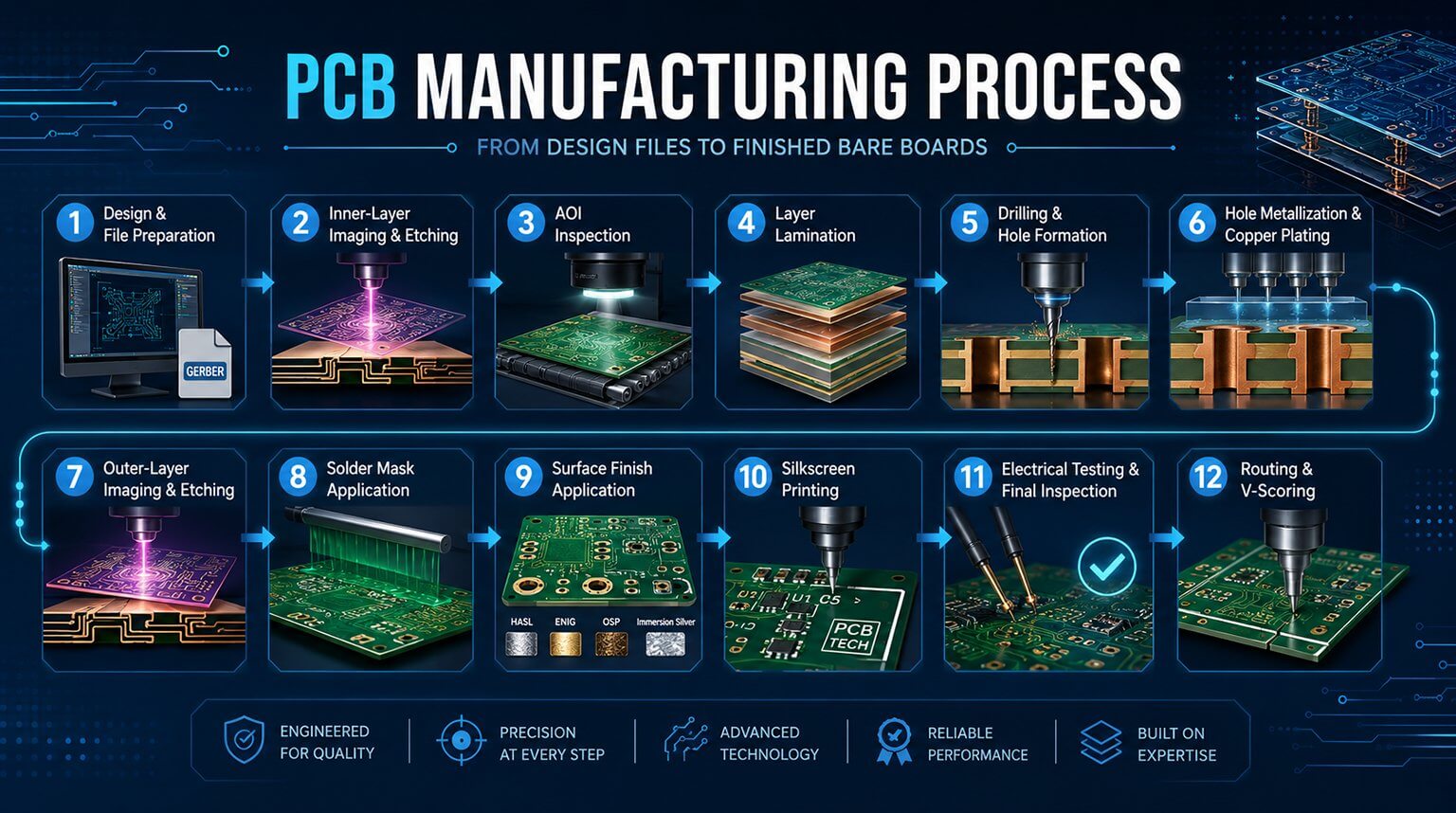
Before releasing Gerber files for production, engineering teams should complete a full DFM review, with particular attention to the following areas:
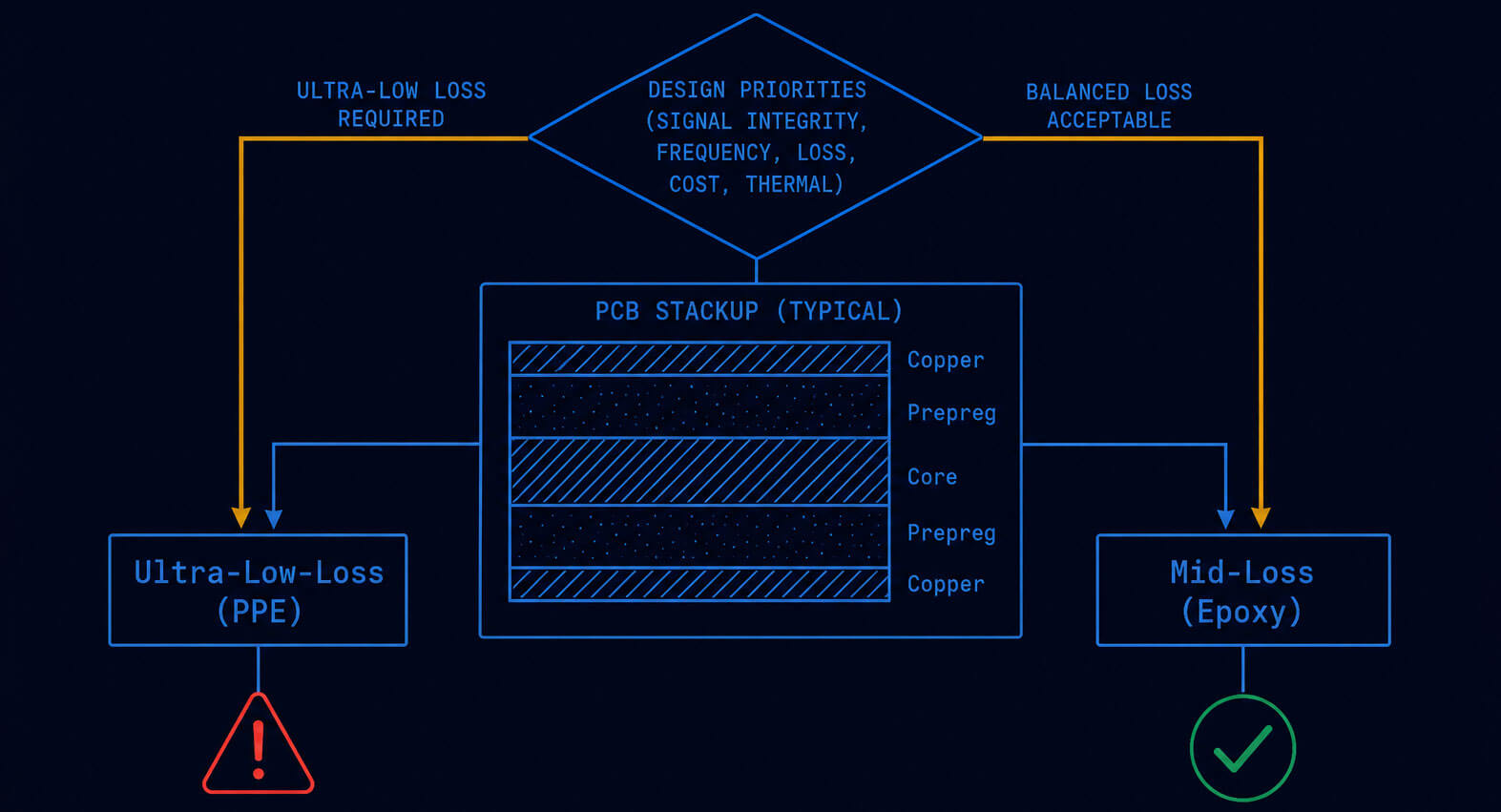
Not every PCB in a product needs an ultra-low-loss material. Some designs continue to specify Megtron 6, Panasonic TU-872, or similar low-loss CCLs because those materials were used in earlier revisions, written into customer templates, or carried over from conservative design rules.
In a constrained material market, that default choice is worth reviewing.
For example, for many digital links below 10 Gbps per lane, a mid-loss laminate may still meet insertion-loss requirements with sufficient margin, depending on channel length, via count, connector loss, and the overall SI budget.
For some high-demand CCL grades, availability can change quickly. If production depends on a single laminate from a single supplier, any disruption can stop the build. A better approach is to prepare a second stackup before the primary material becomes unavailable.
A practical process includes:
- Ask the PCB fabricator to provide a second stackup based on an alternative CCL.
- Run impedance calculations based on the alternative material’s Dk, Df, dielectric thickness, and copper foil type.
- Perform SI simulation for critical nets where necessary.
- Verify impedance results through an impedance coupon or trial production board.
- Complete customer approval or internal sign-off before an actual shortage occurs.
When materials are tight, suppliers allocate capacity and material based largely on two things: historical purchase volume and forward demand visibility. Customers that provide rolling forecasts and commit through framework agreements are often in a better position than customers relying only on spot purchasing.
Even a rough quarterly forecast (with a margin of error within ±20%), within a reasonable tolerance, is better than silence. The earlier a customer signals real demand, the more likely suppliers are to reserve capacity and key materials.
When material prices move quickly, quote validity can shorten significantly (potentially to just 5 days). Even if a PCB supplier can quote today, the same material price and inventory position may not be valid several weeks later.
If a company takes two or three weeks to move from quote to PO, several problems can occur during a constrained market:
- Engineering approval may be completed after material prices have already changed.
- Purchasing approval may come after the available material has been allocated to another order.
- Customer approval may arrive after the original quotation has expired.
Engineering, purchasing, and finance workflows therefore need to adapt to shorter material-confirmation windows.
Companies can prepare in advance by setting up:
For projects already in stable volume production, relying on a single region, factory, or supply chain can amplify external risk. Port congestion, energy restrictions, regional policy changes, customs delays, or local material constraints can all affect delivery.
For long-running production programs, a second manufacturing source or a regionalized production plan may be worth evaluating.
This does not mean every project needs to change suppliers immediately. It means that when project scale is large enough and delivery risk is high enough, teams should assess:
- Whether a second PCB or PCBA manufacturing source is needed.
- Whether production options in China, Southeast Asia, Mexico, or other regions should be prepared.
- Whether nearshoring should be considered for North American customers.
- Whether quality systems and engineering documentation can be unified to reduce variation across production sites.
For North American OEMs, shifting some PCBA or final assembly work to Mexico may also support logistics resilience and, where applicable, tariff planning under USMCA rules of origin. However, this should be confirmed according to the specific product, HS code, BOM, origin rules, and trade-compliance documentation.
No single company can solve a global PCB material shortage on its own. But the teams that move through this cycle with the least disruption will be the ones that act early: completing DFM review before production release, pre-screening alternative materials, and spreading production risk across more than one location where necessary.
If your PCB or PCBA project is facing material, stackup, lead-time, or manufacturing challenges, PCBCool is available to review the project with you.
Backed by PS Electronics’ manufacturing resources in China, Malaysia, and Mexico, PCBCool provides free DFM review and material-risk checks for new projects. The goal is not only to quote the board, but to help identify the risks that could affect manufacturing before they turn into production delays.