PCB Testing & Inspection
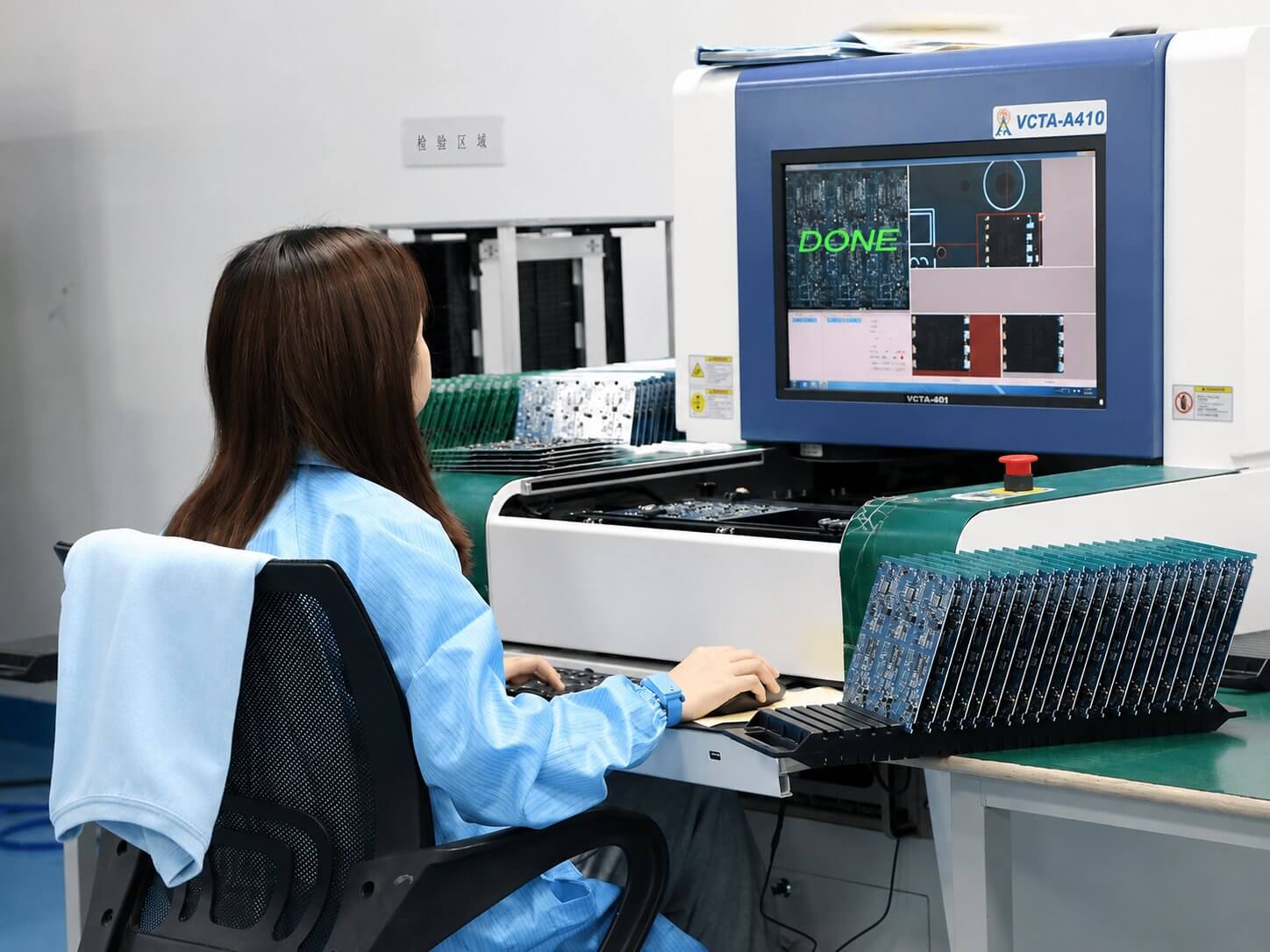
- PCB, PCBA, and Final Assembly Testing Support
- SPI, AOI, X-Ray, E-Test, and Custom Test Options
- Quality Records and Traceability Files Available Upon Request
Low-Volume PCB Solutions
- Turnkey PCB Support, Managed Under One Project Flow
- From Low-Volume Builds to Higher-Volume Production
- 5-Factory Network Across China, Mexico & Malaysia
Testing Built on Real EMS Experience
Backed by more than 20 years of electronics manufacturing experience, PCBCool understands that PCB testing is not just a final inspection step.
It must be connected with engineering review, material control, PCB fabrication, assembly process, functional validation, and final delivery standards.
That is why we have built a systematic testing and inspection workflow into our quality management process.
Test Coverage Map
Plan Testing Before Defects Become Expensive
01
Identify Risks Earlier
Design, material, fabrication, soldering, component, and functional risks can be reviewed before they turn into larger production problems.
02
Control Process Stability
In-process inspection helps confirm whether PCB fabrication and PCBA assembly remain under control during production.
03
Reduce Rework Costs
Earlier detection can reduce repair work, repeated testing, production interruptions, and unnecessary costs.
04
Evidence-Based Delivery
Clear test results and QA records help customers understand whether the product is ready for shipment.
Risk-Based Testing, Not Extra Procedures
PCBCool’s engineering team is involved throughout your project to help define the right inspection and validation steps for production.
Our goal is not to add unnecessary testing procedures. Instead, we match the right testing method with the actual risks of your project, helping you control quality while avoiding preventable cost increases or delivery delays.
Practical Review Path
Gerber files, BOM, test requirements, and application information.
PCB quality, components, soldering, firmware, and final use conditions.
Inspection and testing steps matched to complexity, quantity, and reliability needs.
PCB Testing Capabilities
PCBCool offers customized testing solutions tailored to the specific requirements of your project at every stage of its development.
End-to-End Solutions
With strong testing capabilities built into our manufacturing process, PCBCool provides turnkey EMS services and project-specific solutions tailored to each customer’s requirements.
-
Testing & Validation
Advanced Technologies
Supports complex projects that require higher manufacturing precision, stronger process control, and reliable quality confirmation before delivery.
Build Your Project with More Confidence
Testing helps verify reliability, service life, and product performance before delivery.
If your PCB or PCBA project has strict quality expectations —
Test Reports and Quality Records
For projects that require documented quality control, PCBCool can provide test records, inspection images, and production notes based on customer requirements. These records help engineering, quality, and procurement teams review the project before delivery.
Ready to Move Your Project Forward?
Send us your project details. PCBCool will help review the technical requirements and recommend a suitable PCB manufacturing approach.
Commitment to Quality
Certification Compliance Support
-
Support for ISO 9001 quality management system
-
Compliance with ISO 14001 environmental management system
-
Adherence to ISO 45001 occupational health and safety standards
-
Compliance with IPC-A-610 and IPC J-STD-001 standards
-
Support for RoHS / REACH environmental compliance
-
Support for UL and CE certifications
-
Support for ISO 13485, IEC 62031, and other industry-specific certifications

Manufacturing Process Control
-
Full BOM and lot traceability across production
-
Material traceability (components, boards, solder paste, etc.)
-
Process documentation for regulated manufacturing
-
First Article Inspection (FAI) support
-
In-process quality checks and monitoring
-
Controlled ESD & cleanroom processes (if applicable)
-
Complete inspection records and test reports
-
Change control and nonconformance management
Frequently Asked Questions
A: PCB testing focuses on the bare board, including continuity, open and short circuits, dimensions, and surface finish. PCBA testing is performed after component assembly to check soldering quality, electrical behavior, firmware operation, and product function.
A: Not always. However, at PCBCool, 100% bare PCB electrical testing is part of our quality commitment to customers.
A: Flying probe testing does not require a dedicated fixture, so it is suitable for prototypes, small batches, and engineering validation. ICT usually requires a test fixture and is more suitable for batch production with repeated testing needs.
A: A test fixture becomes valuable when the project enters stable batch production and the same electrical or functional test needs to be repeated.
A: Yes. A test fixture usually requires separate design and fabrication, so there is a one-time cost.
A: No. AOI works well for common visible defects, but special surface requirements, connectors, labels, and other details may still require manual review.
A: No. X-ray inspection is mainly used for solder joints that cannot be seen from the surface, such as BGA, QFN, LGA, bottom-terminated components, and hidden solder joints.
A: No. Some marginal contact issues, thermal stress problems, or operating failures still need electrical and functional validation.
A: First article inspection confirms whether the first assembled board or first production samples meet production requirements, helping prevent batch-level errors before mass production continues.
A: Customers usually need to provide test steps, functional descriptions, firmware files, test software, connection methods, acceptance criteria, and any required test fixtures.
A: Yes. PCBCool can help discuss a workable test approach, but the procedure should be based on product function, application conditions, and customer acceptance standards.
A: No. Firmware programming writes the program into the chip or module. Functional testing checks whether the programmed product operates as expected. Many projects require programming first, followed by startup checks or functional validation.
A: No. Aging testing is usually used for projects that need stronger stability screening, such as industrial, medical, power, outdoor, or long-running electronic products.
A: Depending on project requirements, PCBCool can provide AOI inspection records, X-ray images, electrical test records, first article inspection reports, functional test records, aging test records, production batch information, and other traceability files.
A: It depends on the customer’s requirements. If downloadable reports, images, or a complete quality file package are needed, they should be confirmed before production starts.
A: Yes, they can be used as supporting reference materials. Whether they meet the customer’s internal audit system depends on the customer’s own standards.
A: The issue is recorded and reviewed first. Then we check whether it is related to manufacturing, materials, assembly, design, or test conditions. When needed, PCBCool can provide feedback to support improvement decisions.