LED lights are an essential part of modern life, found everywhere—from phone screens and TVs to ceiling lights, billboards, and even the tiny indicators on smart devices. As LED technology becomes more mainstream, SMD LEDs are gaining attention for their versatility and widespread use.
For newcomers to the world of LEDs, terms, specs, and applications related to SMD LEDs can be overwhelming. Don’t worry—this guide from PCBCool is here to help. We’ll walk you through the basics, break down the technical details, and explain why SMD LEDs are so integral to our daily tech.
So, let’s begin with today’s topic!
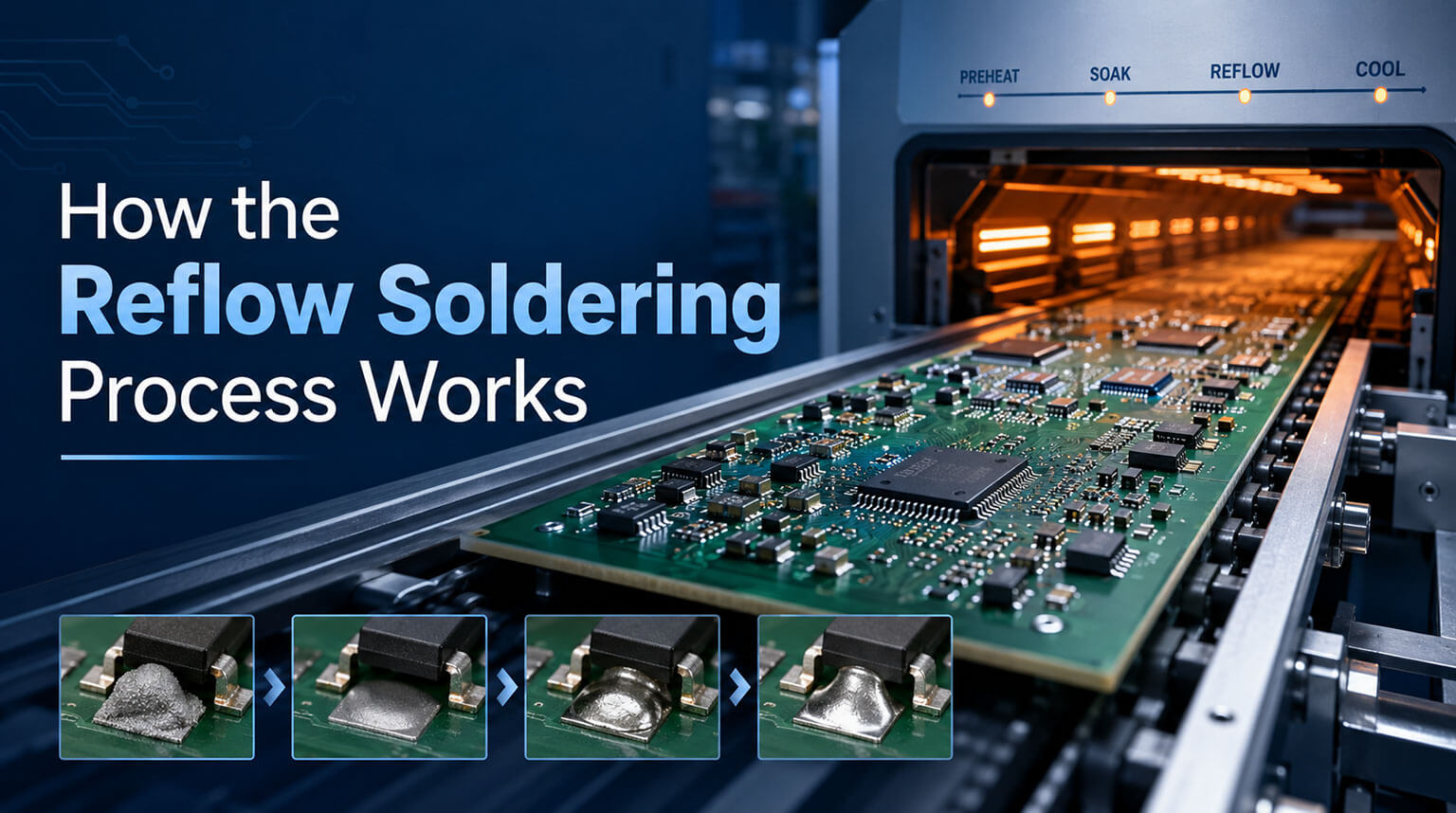
SMD stands for “Surface Mount Device,” which is why SMD LEDs are often referred to as “Surface-Mounted Light Emitting Diodes.” These LEDs use surface-mount technology (SMT) to attach the light-emitting chip directly to a printed circuit board (PCB) without the need for traditional through-hole pins, like those found in DIP (Dual In-line Package) LEDs.
At their core, SMD LEDs operate on the same principle as regular LEDs. They rely on the PN junction of a semiconductor chip to emit light. Here’s how it works:
When a forward voltage is applied to the PN junction, current flows from the anode to the cathode. This causes the minority charge carriers to recombine with the majority carriers inside the semiconductor, releasing excess energy as light. Essentially, electrical energy is converted into light. When reverse voltage is applied, the minority carriers can’t flow, and no light is emitted.
What sets SMD LEDs apart is their ability to address key limitations of traditional through-hole LEDs. These improvements include reduced size, higher integration, and better heat dissipation, making SMD LEDs ideal for compact, high-performance applications.
It’s important to note that SMD LEDs aren’t a specific product, but rather a “packaging type.” Any LED that uses surface-mount technology and meets the required package specifications is considered an SMD LED.
The light-emitting chip is the “heart” of an SMD LED, responsible for critical parameters like color, brightness, and color temperature. These chips are typically made from semiconductor materials such as Gallium Arsenide (GaAs) or Gallium Nitride (GaN). Depending on their design, chips fall into three types:
- Red chips are usually vertical, requiring just one anode lead.
- Blue/green chips are typically upright and need both anode and cathode leads.
- Flip-chip designs don’t need gold wire connections, which reduces light blocking and boosts efficiency.
The heat sink not only supports the chip but also helps dissipate heat to maintain performance. Made from metals like copper or aluminum alloy, which have excellent thermal conductivity, the surface is often silver-plated to enhance conductivity and minimize light loss. Heat sinks come in two main types:
- Metal heat sinks are cost-effective and ideal for standard applications.
- Ceramic heat sinks are better suited for high-power or high-temperature environments.
These components link the chip to the heat sink and facilitate current flow. Two primary methods are used:
- Gold wire is the most common choice, offering excellent conductivity and stability, suitable for mid-to-high-end products.
- Conductive adhesive is more budget-friendly and used in low-power, cost-effective SMD LEDs.
- Flip-chip designs eliminate the need for gold wire by bonding the chip directly to the heat sink.
Encapsulation resin surrounds the chip and heat sink to protect the internal structure and optimize light transmission. Common materials include:
- Epoxy resin for standard applications.
- Silicone for high-temperature or high-humidity environments.
Fluorescent powders are often added to the resin to modify the emitted light’s color. For example, white light SMD LEDs use a yellow phosphor coating around a blue chip, combining blue and yellow light to produce white light.
Solder pads, located at the base of the heat sink, are the interface for the SMD LED to connect to the PCB. Made from tin-plated copper, these pads are attached to the PCB using SMT Technology to ensure proper fixation and current transmission.
The pad size and spacing must align with the PCB design to ensure strong solder joints and avoid issues like cold soldering or de-soldering, which can negatively affect LED performance.
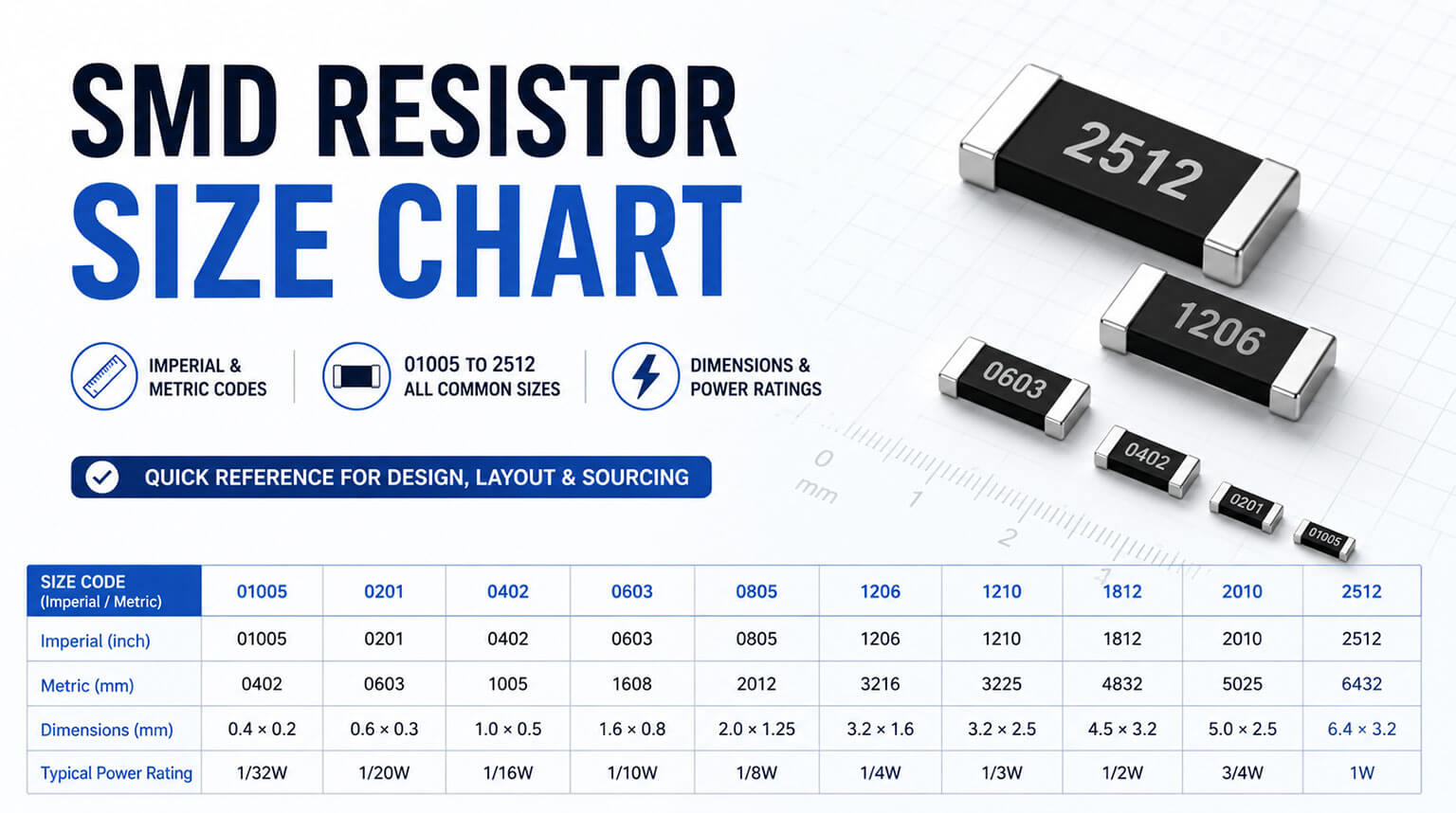
- 0603 (1.6×0.8mm): One of the smallest SMD LED sizes, measuring just 0.3mm thick, with a low power rating of ≤0.06W. It’s perfect for micro-electronic devices, smart wearables, and indicator lights in mobile phones.
- 0805 (2.0×1.2mm): A common choice for low-power applications, with a power rating between 0.06-0.1W. It has a viewing angle of around 120° and is typically used in remote controls, keyboard indicator lights, and small backlighting applications.
- 1206 (3.2×1.6mm): A medium-power, entry-level SMD LED, offering a power rating of 0.1-0.2W. It provides higher brightness than the 0805, making it suitable for small LED modules and general-purpose device backlighting.
- 3528 (3.5×2.8mm): A mainstream medium-power LED with a power rating of 0.2-0.5W and a wide viewing angle (120-160°). It’s commonly used in indoor lighting, LED strips, and TV backlighting.
- 5050 (5.0×5.0mm): A medium-to-high-power specification with a power rating of 0.5-1W. Often found in RGB configurations (integrating red, green, and blue chips in one package), these LEDs allow for color-changing effects and are popular for outdoor decorations and color-changing LED screens.
Special Specifications:
- Side-Emitting LEDs: Examples include 0905 (2.2×1.2mm) and 1605 (4.0×1.4mm). These are used for side-backlighting in devices like mobile phones and tablets.
- High-Power LEDs: Examples include 3030 and 3535, with a power rating of 1-3W. These are used in high-brightness applications such as outdoor lighting, floodlights, and large-scale displays.
- Low-Power SMD LEDs: Power ≤ 0.1W, typically found in sizes like 0603 and 0805. These LEDs don’t require extra heat dissipation and are commonly used for indicator lights and low-brightness backlighting.
- Medium-Power SMD LEDs: Power ranging from 0.2W to 1W, typically found in sizes like 3528 and 5050. Some of these LEDs may require aluminum substrates for heat dissipation. They are ideal for indoor lighting, LED strips, and general display purposes.
- High-Power SMD LEDs: Power ≥ 1W, typically seen in sizes like 3030 and 3535. These require heat sinks (usually designed for an operating temperature ≤150°C). With light efficiency of up to 150-200lm/W, they are perfect for high-brightness outdoor lighting, plant growth lamps, and advertising displays. They also have an impressive lifespan, ranging from 50,000 to 100,000 hours.
SMD LEDs come in both monochrome and full-color versions. Common monochrome colors include:
- Red: 620-630nm
- Green: 520-530nm
- Blue: 460-470nm
- Yellow: 580-590nm
Full-color LEDs, often in RGB configurations (e.g., 5050 RGB), combine red, green, and blue light to create millions of color variations, enabling dynamic color effects.
- Brightness refers to the intensity of light, measured in candela (cd).
- Luminous flux is the total light output, measured in lumens (lm).
These two factors are directly related. The higher the chip quality, the higher the luminous flux and brightness. For instance, a 1W high-power SMD LED can produce 60-110lm, while a 3W version can produce up to 240lm.
Color temperature, measured in Kelvin (K), describes the warmth or coolness of the white light:
- 2700–3500K: Warm white, with a soft yellowish tone. Ideal for bedrooms, living rooms, and creating a cozy atmosphere.
- 4000–5000K: Neutral white, offering a natural tone. Best for offices, classrooms, and general lighting.
- 6000–6500K: Cool white, with a bluish tint. Provides high brightness, perfect for commercial spaces, factories, and outdoor lighting.
CRI measures how accurately a light source reveals the true colors of objects. The scale ranges from 0 to 100, with higher values indicating better color accuracy:
- For everyday lighting, a CRI of 70-80 is usually sufficient.
- For applications requiring precise color accuracy (like jewelry stores or photography studios), a CRI of 90 or above is recommended.
- High-quality SMD LEDs can achieve a CRI of over 95, making them perfect for premium lighting needs.
The viewing angle indicates the range over which the SMD LED emits light, typically measured in degrees (°). It’s categorized into narrow and wide angles:
- Narrow Angle (20°-60°): Focused light, great for spotlights or stage lighting.
- Wide Angle (120°-180°): Diffused light, ideal for ceiling lights, LED strips, and large displays. Some SMD LEDs offer a viewing angle of up to 160-180°, providing an even better viewing experience.
The operating voltage typically ranges from 2-3.6V, depending on the LED’s color (e.g., red typically operates at 2.0-2.2V, while blue requires 3.0-3.6V). The operating current depends on the power rating:
- Low Power: 20mA
- Medium Power: 30-150mA
- High Power: Above 150mA
When using SMD LEDs, it’s crucial to match the correct power driver to avoid damage from excess voltage or current. For high-power LEDs, a constant current power supply is recommended for stable operation.
Under normal conditions, SMD LEDs can last between 25,000 to 50,000 hours. High-quality, high-power models can last up to 100,000 hours, far outlasting traditional incandescent bulbs (which last around 1,000 hours) and energy-saving bulbs (lasting about 8,000 hours).
Luminous decay refers to the gradual decrease in brightness over time. A high-quality LED should exhibit no more than 10% luminous decay after 10,000 hours. Factors such as heat dissipation and operating current influence the rate of decay.
Effective heat dissipation is key to extending the lifespan of SMD LEDs. High-power LEDs often require aluminum substrates and heat sinks to prevent overheating, which can lead to faster decay or even damage.
The protection rating (IP rating) measures an LED’s resistance to water and dust:
- IP65: Suitable for light exposure to outdoor rain.
- IP67: Suitable for immersion in water.
For outdoor use, it’s crucial to choose SMD LEDs with a high protection rating to ensure durability in harsh environments.