Blog
Flexible PCB Applications and Design Key Points for Each Use

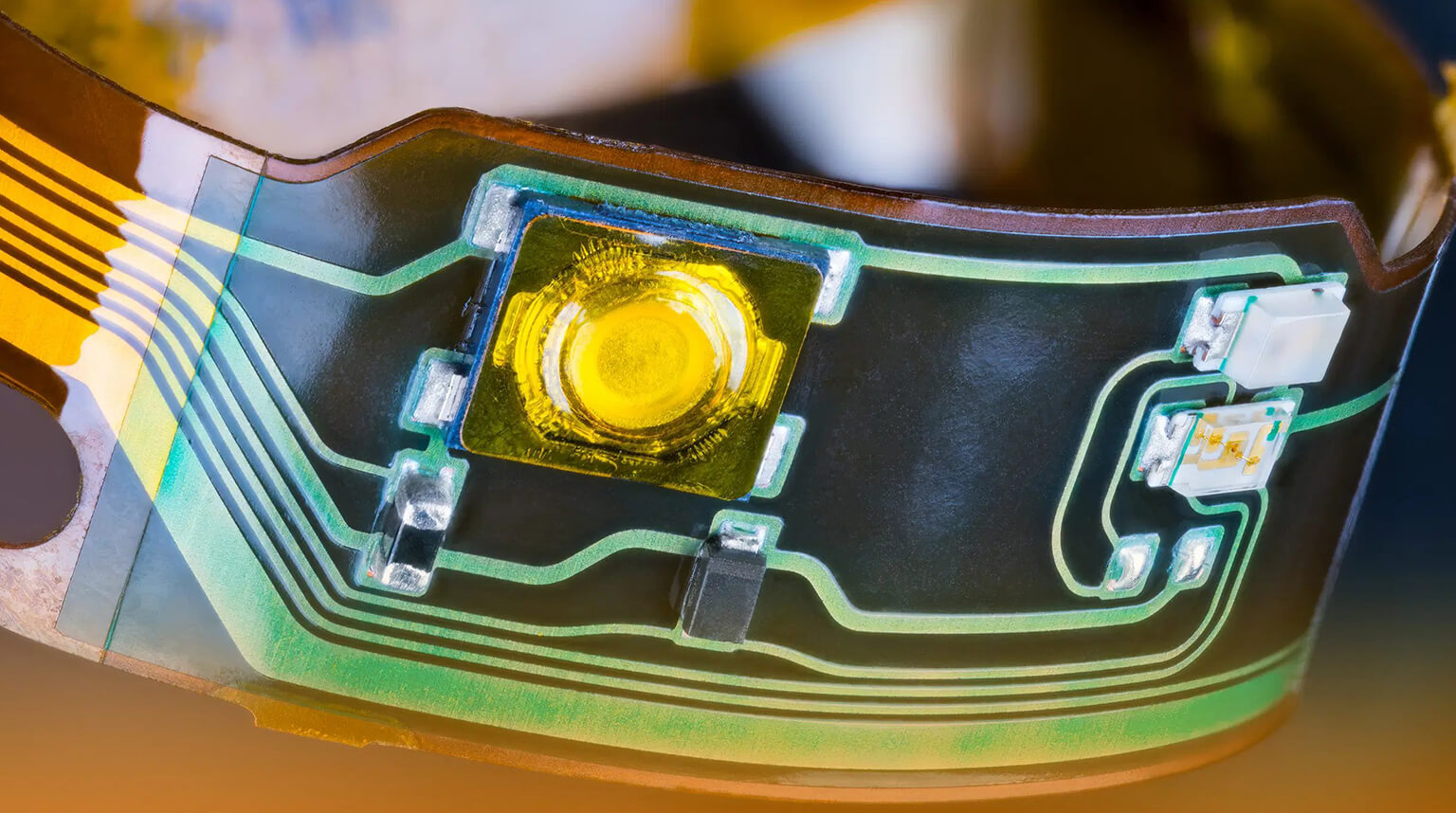
With the rapid development of the miniaturization electronics market, flexible PCB have gradually become a crucial component in innovative technologies. Due to their unique advantages, including flexibility, foldability, lightweight design, and vibration resistance, flexible circuits break the spatial layout limitations of traditional rigid PCB. They can easily adapt to three-dimensional mounting and dynamic bending scenarios.
This flexibility has led to widespread use of flexible PCB across core industries such as consumer electronics, automotive electronics, and medical devices. Unlike the standardized selection of rigid PCB, the number of layers, substrates, and design considerations for flexible PCB must strictly account for the electrical performance, environmental adaptability, and mechanical requirements of each application scenario.
Therefore, in this article, PCBCool will address the three core questions of “applications of flexible PCB, selection criteria, and how to choose the right type” based on industry segments.
Consumer Electronics: The Core Battlefield for Flexible PCB
The consumer electronics sector is the largest and most diverse field for flexible PCB, with key requirements including thinness, high-density wiring, dynamic bending adaptation, and a balance between cost and signal stability.
Mobile Devices
Typical Applications and Specifications:
- Screen Connection Ribbon (OLED Flexible Screen): Typically uses 2-4 layers of PI substrate with an adhesive-free structure (thinner, better bending resistance), and copper foil thickness of 18-35μm (excellent bending durability and grain structure continuity), supporting dynamic bending with the screen’s opening and closing. It can endure more than 200,000 bends without failure. Some high-end models use LCP substrates to reduce high-frequency signal attenuation.
- Camera Module Connection: Uses 1-2 layers of PI substrate with line widths and spacings as low as 30μm/30μm, supporting compact layouts for multiple cameras and periscope zoom modules. It ensures signal transmission between the image sensor and the main board while supporting optical image stabilization (OIS) actuators for flexible operation.
- Battery and Button Connections: 1-layer PI substrate, low-cost adaptation for static wiring needs, copper foil thickness of 18μm, balancing conductivity and lightness while reducing internal space usage.
Selection Rationale:
Replaces traditional wiring harnesses to significantly reduce size and weight, while avoiding the risk of wire breakage due to bending. The PI substrate can withstand high temperatures during reflow soldering, meeting terminal assembly process requirements.
Wearable Devices
Typical Applications and Specifications:
- Smartwatches/Bands: 1-2 layers of PI substrate with thicknesses ranging from 0.1-0.2mm, utilizing 12-18μm ultra-thin copper foil to adapt to the curved structure of the device. It connects the main board, display screen, and sensors like heart rate and blood oxygen sensors. Some high-end models use flexible glass substrates, combining flexibility with high hardness.
- AR/VR Headsets: 4-6 layers of LCP substrate, leveraging its low dielectric constant (Dk=2.9~3.1) and ultra-low loss factor (Df<0.002) to reduce high-frequency signal attenuation. It supports frequencies above 24GHz and connects optical modules, micro displays, and various sensors.
- TWS Earbuds: 1-layer PI substrate, compact design to fit within the tight and irregular spaces of the earbud housing, connecting the main board, speaker unit, microphone, and battery. Copper foil thickness is 12μm, balancing conductivity and lightweight design.
Selection Rationale:
The flexible structure conforms to the curvature of the human wrist, head, etc., achieving miniaturization and lightweight design. PI substrates offer good thermal resistance, suitable for microcomponent soldering, while LCP substrates meet high-frequency signal transmission requirements.
Other Consumer Electronics
Typical Applications and Specifications:
- Digital Cameras/Camcorders: 1-3 layers of PI substrate, connecting the lens assembly, sensor, and main board. It supports dynamic bending for flip screens, with copper foil thickness of 35μm for a balance between conductivity and cost.
- Game Controllers: 2 layers of PI substrate, connecting buttons, joysticks, and the main board, adapting to the compact internal layout and enhancing operational response stability.
Automotive Electronics: An Expanding Market with High Reliability Demands
The core demands for flexible PCB in the automotive electronics sector are high-temperature resistance, vibration resistance, corrosion resistance, and long service life, capable of withstanding extreme vehicle environments ranging from -40°C to 125°C.
In-Vehicle Connectivity and Smart Cockpit
Typical Applications and Specifications:
- Central Control Screen and Dashboard Connections: 2-4 layers of PI substrate with a copper foil thickness of 35μm, featuring an adhesive structure (enhancing mechanical strength), capable of withstanding continuous vibrations during vehicle operation to prevent solder joint failure. The design adapts to curved and floating screen installations.
- In-Car Camera Connections (Reversing, Surround View, ADAS): 3-6 layers of PI substrate, designed with electromagnetic interference (EMI) resistance. Line widths and spacings can be as small as 30μm/30μm, connecting camera modules and vehicle processors for high-definition image transmission.
Core Components of New Energy Vehicles
Typical Applications and Specifications:
- Battery Management System (BMS): 4-8 layers of PI substrate, using buried/blind hole designs (minimum hole diameter of 0.1mm) for high-density wiring, reducing the volume of the battery management unit by 40%. This design improves electromagnetic interference (EMI) resistance by 50%. Copper foil thickness is 35-50μm, suitable for high-current transmission to monitor battery cell voltage and temperature. The adhesive-free structure reduces moisture absorption and improves long-term stability.
- Vehicle Radar (Millimeter Wave): 4-6 layers of LCP substrate, designed for frequencies above 24GHz, with signal loss under 0.5dB/inch at 10GHz. It is used for distance detection and obstacle recognition in autonomous driving. Some high-end models use PTFE substrates to enhance extreme environmental resistance.
Selection Rationale:
Flexible PCB replace traditional wiring harnesses, reducing the vehicle’s weight by 30%, and simplifying the wiring complexity. Solder joint reliability is much higher than that of rigid PCB, reducing the risk of failures in vehicles.
Other Vehicle Components
Typical Applications and Specifications:
- Door and Seat Sensor Connections: 2 layers of PI substrate, designed for dynamic movement and flexible wiring, with vibration resistance.
- LED Vehicle Lighting: 1-2 layers of PI substrate, copper foil thickness of 35μm, with high temperature and aging resistance, designed to fit the compact layout inside vehicle lights.
Medical Equipment: Precise Adaptation to Extreme Applications
The medical equipment industry’s demand for flexible PCB focuses on miniaturization, biocompatibility, resistance to sterilization, and high reliability, catering to special scenarios such as implantable and minimally invasive devices.
Implantable Medical Devices
Typical Applications and Specifications:
- Pacemakers, Neurostimulators, etc.: 1-2 layers of medical-grade PI substrate, thickness 0.05-0.1mm, copper foil thickness of 12-18μm, biocompatibility certified by ISO 10993, stable operation for over 10 years in the human body. The adhesive-free structure minimizes foreign body reactions and resists body fluid corrosion, making it adaptable to complex internal environments.
Selection Rationale:
The miniaturized and flexible design conforms to human tissues, preventing damage to organs. PI substrates offer excellent biocompatibility, thermal resistance, and can adapt to stable environments inside the human body with no signal interference.
Minimally Invasive and Portable Medical Devices
Typical Applications and Specifications:
- Endoscopes: 2-3 layers of PI substrate, ultra-thin design (thickness <0.1mm), bends with the catheter to transmit signals and images, ideal for the narrow spaces in minimally invasive surgery.
- Portable Monitoring Devices (ECG Patches, Glucose Meters): 1 layer of PET or PI substrate, PET for low-cost static scenarios, PI for dynamic scenarios requiring repeated attachment to the human body. It resists alcohol, iodine, and other disinfectants, conforming to body curves for accurate data collection.
- Ultrasound Probes: 2-4 layers of PI substrate, connecting the piezoelectric ceramic array and processing circuits. The flexible structure adapts to the probe’s curved design to enhance detection accuracy.
Military and Aerospace: High-End Applications in Extreme Environments
This sector demands the highest standards for flexible PCB, including extreme temperature resistance, radiation tolerance, lightweight design, and high reliability, withstanding environments ranging from -196°C to 400°C and cosmic radiation.
Typical Applications and Specifications:
- Satellite Payload Systems: 4-8 layers of PTFE substrates, PTFE withstands extreme temperatures from -269°C to 260°C and strong radiation. Signal attenuation is below 0.5dB/m, ensuring stable communication between the satellite and ground stations. The lightweight design reduces launch costs.
- Aerospace Radar and Guidance Systems: 3-6 layers of LCP or PTFE substrates, designed for high-frequency signal transmission and strong EMI resistance. These PCB are stable in high-altitude, high-vibration environments and are used for flexible feedlines and signal interconnection in phased-array radar and guidance systems.
- Military Portable Devices: 2-4 layers of PI substrate, resistant to impact and corrosion, adapted for harsh battlefield environments, used for internal wiring of military communication radios and portable testing instruments.
Selection Rationale:
The flexible structure adapts to the complex 3D layouts of aerospace devices, significantly reducing the device’s weight. High-end substrates resist extreme temperatures, radiation, and vibrations, providing far superior reliability compared to rigid PCB and preventing circuit failure in extreme conditions.
Industrial Equipment: Precise Adaptation for Niche Scenarios
The core demand in the industrial equipment sector is wear resistance, interference resistance, and adaptability to mechanical movements.
Typical Applications and Specifications:
- Industrial Robot Joint Wiring: 2-4 layers of PI substrate with rolled copper foil, resistant to over one million bends, absorbing vibration energy and reducing solder joint cracking risks.
- Automated Equipment Slide Rails and Robotic Arm Sensor Connections: 2 layers of PI substrate with interference-resistant design, suitable for long-term dynamic motion.
Final Thoughts
The application of flexible PCB is fundamentally about “scene adaptability”—its core value lies in breaking the spatial and form limitations of rigid PCB while meeting the special environmental and performance requirements of different industries. The selection of layer count and substrate is based on three core dimensions:
- Environmental Adaptability: High temperatures (>150°C, choose PI/LCP), high frequencies (>10GHz, choose LCP/PTFE), humid/corrosive environments (prefer adhesive-free PI, PTFE), with additional requirements for vibration and radiation resistance in automotive and aerospace applications.
- Mechanical Requirements: Dynamic bending (choose rolled copper and thin PI, 1-4 layers), static bonding (PET for cost reduction), complex mechanical movements require thicker copper foil and more layers for enhanced mechanical strength.
- Electrical Performance: High-speed, high-frequency signals (prefer LCP/PTFE), high-current transmission (increase copper foil thickness to 35-50μm), and high-density wiring (use 4 or more layers with buried/blind hole technology).
At PCBCool, we offer flexible PCB manufacturing and assembly solutions with 1-6 layers, supporting a wide range of industries including consumer electronics, automotive, medical devices, and more. Our experience ensures tailored solutions that meet the specific requirements of each project, delivering reliability, performance, and innovation.
Frequently Asked Questions (FAQ)
A: A flexible PCB or FPCB is a circuit board made from flexible substrates, allowing it to bend and fold, making it suitable for complex 3D layouts.
A: A rigid-flex PCB combines both rigid and flexible PCB, where the flexible parts are typically used for connections.
A: Flexible PCB offer better space adaptability and bending performance but may lack the mechanical strength and load-bearing capacity of rigid PCB, especially in heavy-duty applications.
A: The soldering process of flexible PCB requires careful attention to material heat stability, joint strength, and preventing substrate damage during assembly.
A: Flexible PCB can replace rigid PCB in specific applications, particularly where flexibility, compact design, or lightweight characteristics are essential.
A: Key considerations include bend radius, trace width, layer spacing, and signal transmission requirements. Complex designs should be avoided to minimize production costs.
A: Common substrate materials for flexible PCB include Polyimide (PI), Liquid Crystal Polymer (LCP), and Polyester (PET).
A: Material selection depends on factors like temperature, frequency, environmental conditions, and mechanical requirements. For instance, PI is ideal for high-temperature environments, while LCP is better for high-frequency signal transmission.
A: Yes, they typically withstand temperatures exceeding 150°C, making them suitable for high-temperature applications.
A: LCP-based flexible PCB are ideal for high-frequency applications due to their low dielectric constant and low loss characteristics, minimizing signal attenuation for stable high-frequency transmission.
A: Yes, the flexibility of these PCB makes them well-suited for complex 3D designs, especially in electronic devices with space constraints.
A: Depending on the material and design, flexible PCB can typically endure over 200,000 bends. Dynamic bending applications must account for this during the design phase.

Loki has worked in international trade and PCB since 2021, with experience in PCB fabrication, assembly, and customer communication. At PCBCool, he supports technical content publishing and helps connect customer inquiries with the right account manager for efficient project follow-up.