
Blog
Was ist der Unterschied zwischen SMT und SMD
If you’re new to electronics, disassembling circuit boards, or just getting started with SMT soldering, you’ve probably come across two confusing terms: SMT and SMD.
Many beginners mix them up—or even assume they mean the same thing. You might hear someone say, “I use SMT soldering,” or “I bought some SMT components.” In reality, the first statement is correct, while the second is completely wrong.
Although SMT and SMD differ by just one letter, they are fundamentally different concepts—yet closely related and inseparable. This guide breaks them down in a simple, practical way, covering definitions, differences, and their relationship. By the end, you’ll not only understand the distinction but also the logic behind modern electronic assembly.
What Is SMT
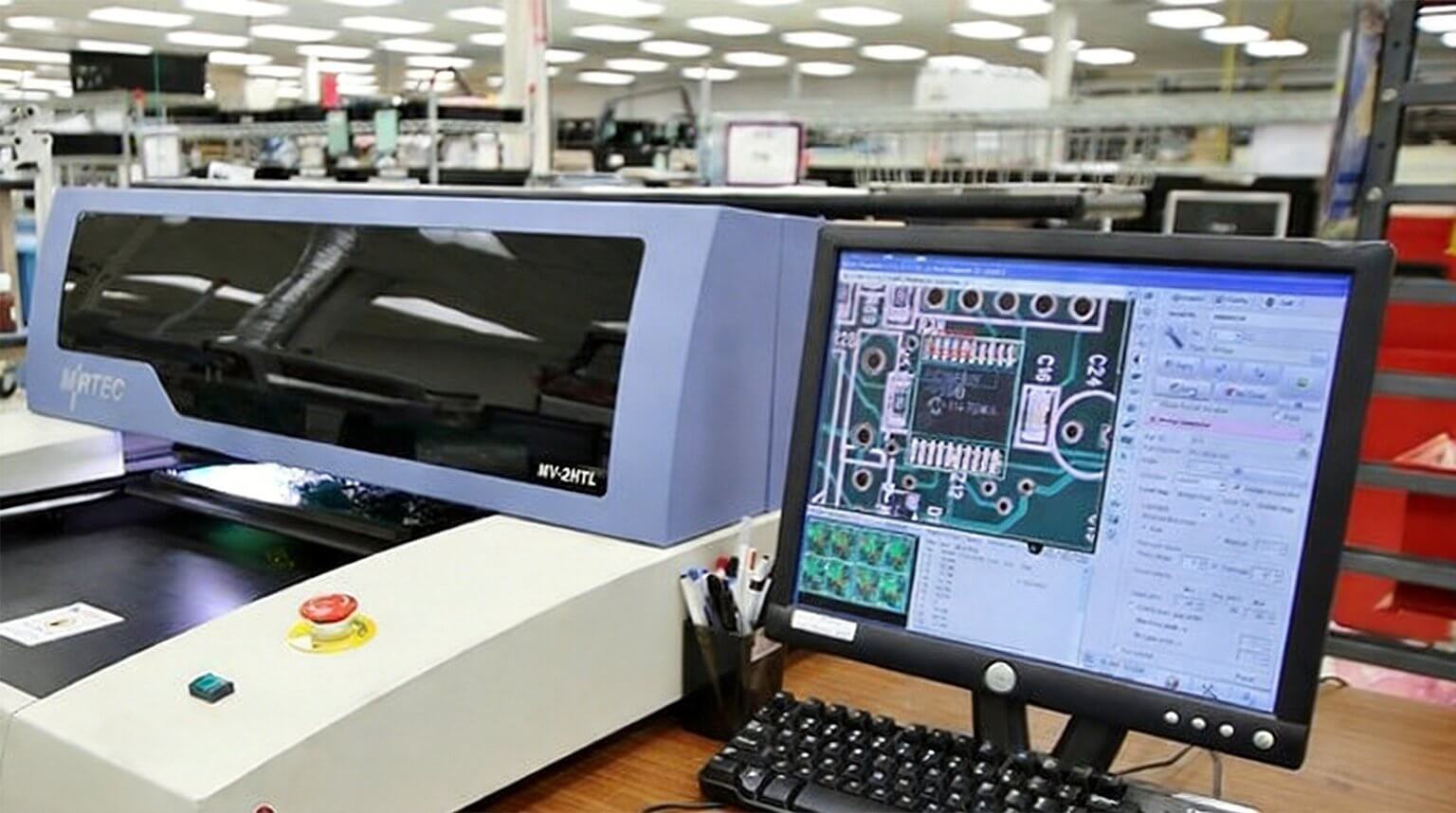
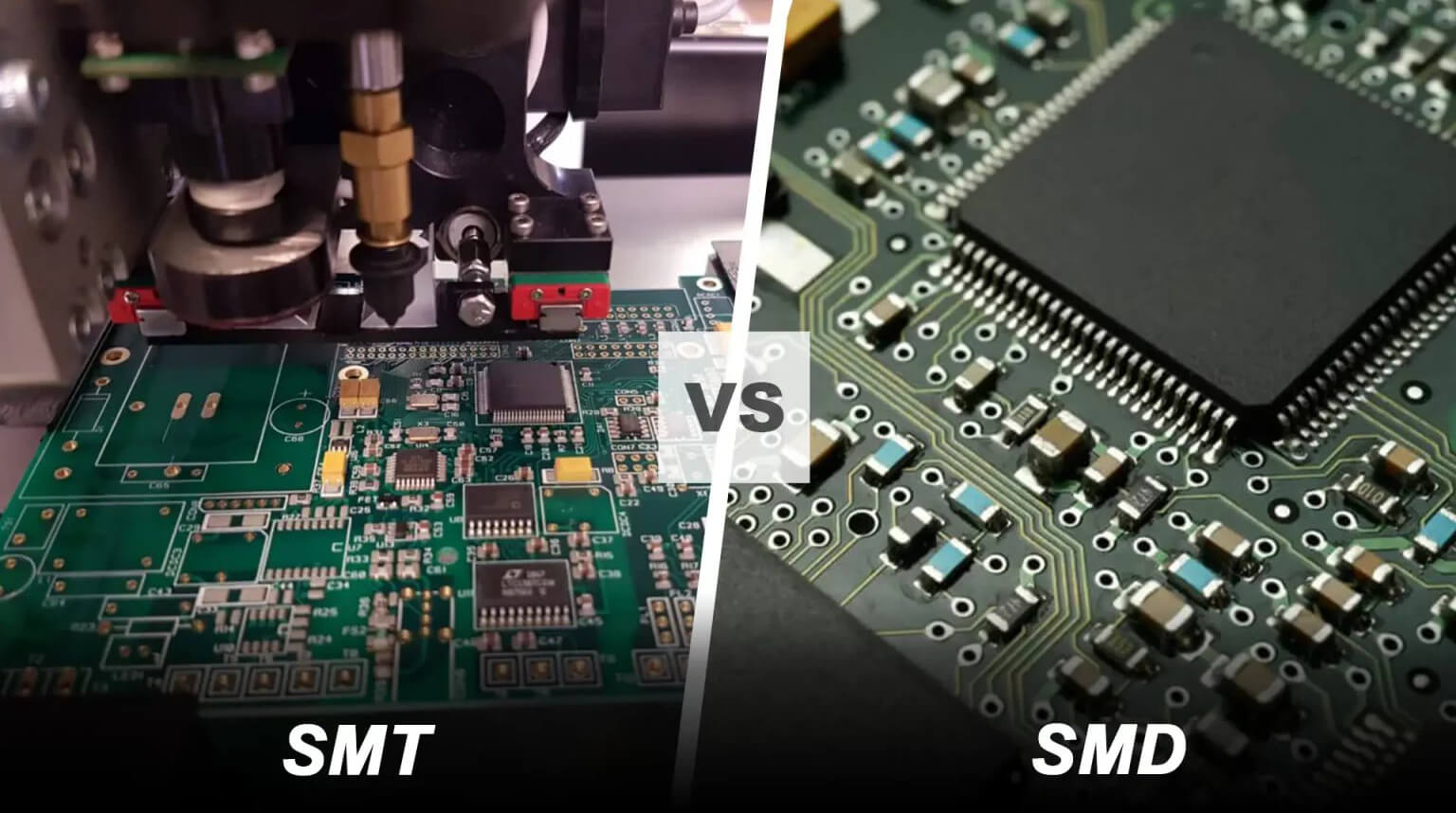
SMT—short for Surface Mount Technology—is a complete method for mounting and soldering electronic components directly onto the surface of a PCB. It replaces traditional through-hole technology (THT) and covers the entire assembly workflow from preparation to inspection.
Key characteristics of SMT:
- Core function: Provides an efficient and precise way to mount components onto a PCB, acting as the “bridge” between the board and the components.
- Process steps: PCB preparation → solder paste printing → component placement → reflow soldering → inspection → rework and cleaning
- Common forms: Industrial automated SMT and manual SMT.
- Vorteile: Higher component density, smaller size, improved efficiency, and better high-frequency performance compared to through-hole assembly.
- Applications: Used in almost all modern electronics—from smartphones and routers to industrial control systems, automotive electronics, and medical devices.
What Is SMD
SMD—short for Surface Mount Device—refers to electronic components designed specifically for surface mounting. Unlike traditional through-hole components, SMDs do not have long leads, allowing them to be mounted directly onto the PCB surface without drilling holes.
Key characteristics of SMD:
- Core function: The fundamental building blocks of electronic circuits, responsible for functions such as conduction, filtering, amplification, and control.
- Main features: Small size, lightweight, short or no leads, and fine pitch.
- Common types: Chip resistors, diodes, SOIC ICs, USB ports, and tactile switches.
- Package sizes: 0402, 0603, 0805 (passives), SOT-23 (transistors), SOIC (ICs), etc.
- Applications: Found in all SMT-based electronic products.
SMT vs. SMD
| Category | SMT (Surface Mount Technology) | SMD (Surface Mount Device) |
|---|---|---|
| Nature | Process / method / workflow | Physical components |
| Zweck | Mount and solder components onto PCB | Form the functional building blocks of circuits |
| Form | Process steps, equipment, techniques | Actual parts (resistors, ICs, LEDs, etc.) |
| Features | Efficient, precise, high-density, scalable | Small, lightweight, fine-pitch, SMT-compatible |
| Categories | Automated SMT, manual SMT | Passive, semiconductor, IC, special components |
| Dependency | Requires SMD components | Requires SMT process for assembly |
| Beginner interaction | Soldering with tools or machines | Purchasing components |
| Common misconception | Mistaken as “components” | Mistaken as “process” |
In practice, people often say “SMD mounting” or “SMT assembly.” The term “mounting” refers to a step within SMT, while “assembly” is the overall goal. In essence, it’s always using SMT processes to handle SMD components.
Relationship Between SMT and SMD
Although SMT and SMD are different, they are tightly connected and cannot exist independently. Their relationship can be understood from three perspectives:
SMD Is the Foundation of SMT
SMT relies on surface-mount components. Traditional THT components have long leads and require drilling, making them incompatible with surface mounting.
SMDs were specifically designed to enable SMT. Without SMD components, SMT would have no practical application and could not replace through-hole assembly. Modern miniaturized electronics would not be possible.
SMT Is the Implementation Method for SMD
SMD components cannot be mounted using traditional through-hole methods. They must be placed and soldered directly onto the PCB surface—this is exactly what SMT provides.
For example:
If you have a batch of 0603 resistors (SMD), you must use SMT to assemble them. You apply solder paste, place the components on pads, and heat them to form solder joints. Without SMT, these components cannot be used effectively.
Their Development Evolves Together
SMT and SMD continuously drive each other forward:
- SMD evolution: Components are becoming smaller (0805 → 0402 → 0201) and more complex (QFP → BGA), requiring higher SMT precision
- SMT evolution: Advances in automation and precision (high-speed placement, improved reflow control) enable more complex and integrated SMD designs
Abschließende Gedanken
As electronic devices continue to shrink while becoming more powerful, the combination of SMT processes and SMD components remains at the core of modern PCB assembly. Understanding how they work together is not just a matter of terminology—it reflects how today’s electronics are designed, built, and scaled for real-world applications.
From prototyping to mass production, achieving consistent quality in SMT assembly requires both the right components and a reliable manufacturing process.
Bei PCBCool, we support customers with SMT PCB manufacturing and assembly services, helping turn designs into production-ready boards with stable quality and efficient turnaround.
Häufig gestellte Fragen (FAQ)
Nein, Altium PCB Designer ist kostenpflichtig. Allerdings ist für Neuanwender eine kostenlose 30-tägige Testversion verfügbar.
Ja, Altium ist sowohl für einfache als auch für komplexe Designs, einschließlich Multilayer- und Hochfrequenz-Leiterplatten, ideal.
Loki ist seit 2021 im internationalen Handel und in der Leiterplattenfertigung tätig und verfügt über Erfahrung in der Leiterplattenherstellung, Montage und Kundenkommunikation. Bei PCBCool unterstützt er die Veröffentlichung technischer Inhalte und hilft, Kundenanfragen mit dem zuständigen Account Manager zu verbinden, um eine effiziente Projektverfolgung zu gewährleisten.