

Blog
Was sind Electronic Manufacturing Services
The electronics industry is undergoing a profound transformation. Product complexity and integration levels are increasing at an exponential rate—from multi-chip modules (MCMs) in smartphones to high power-density layouts in industrial equipment, and ultra-precise signal processing in medical devices.
As a result, PCB layer counts continue to rise, component density keeps increasing, and the technical barriers to both design and manufacturing are higher than ever.
At the same time, manufacturing costs and supply chain complexity have become major challenges for companies of all sizes. Startups often lack the capital to build complete production lines, while established enterprises must deal with volatile material costs, fragmented global supply chains, and increasingly strict compliance requirements.
Building and maintaining an in-house manufacturing system is no longer just expensive—it’s time-consuming, risky, and often inefficient.
Against this backdrop, Electronic Manufacturing Services (EMS) has evolved from an optional outsourcing strategy into a mainstream operational model.
If you’re still evaluating whether EMS service is right for your business, this guide will walk you through everything you need to know—from its core definition to when you should use it and how to choose the right partner.
What Is Electronic Manufacturing Services
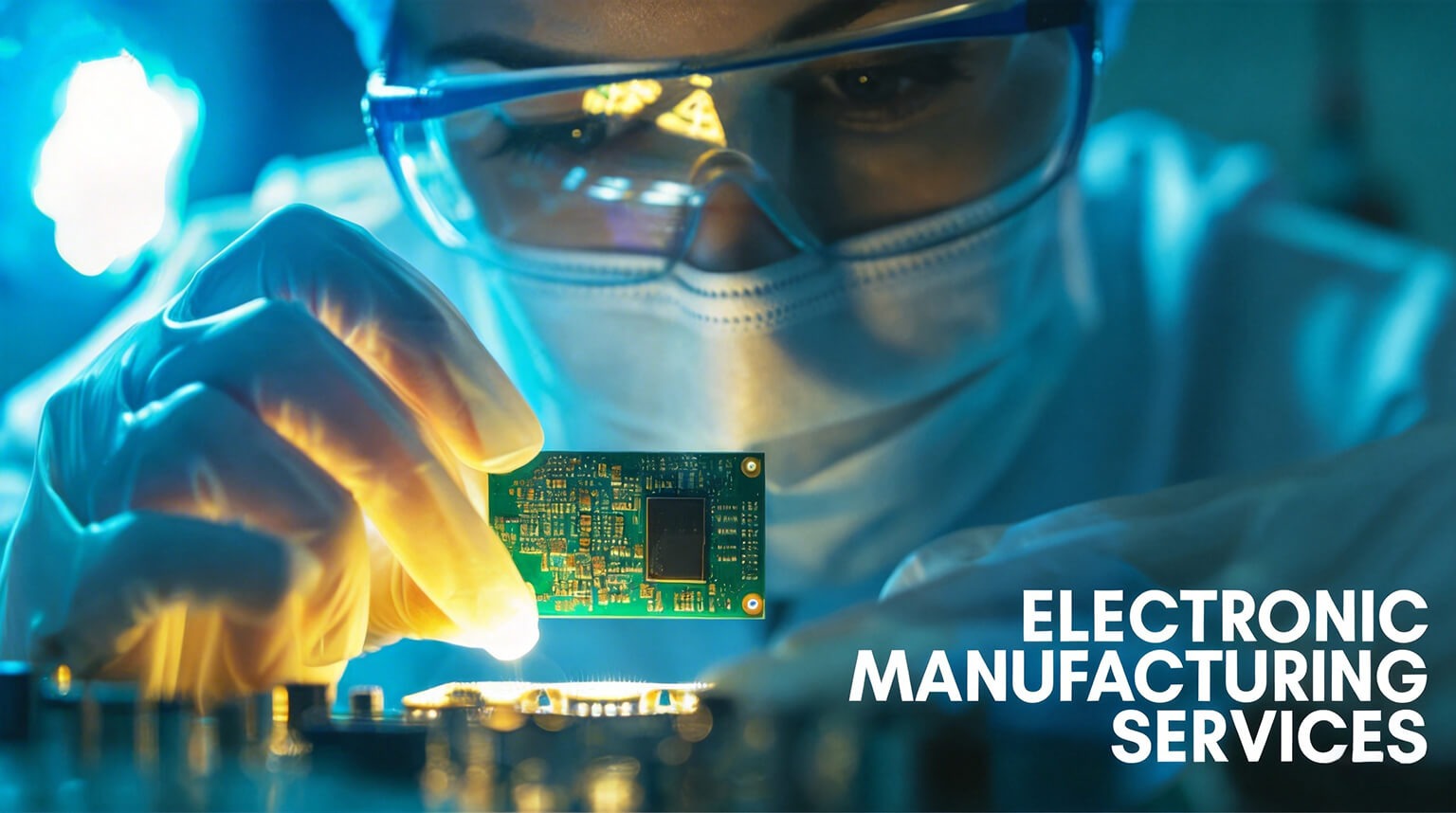
Electronic Manufacturing Services (EMS) refers to a professional outsourcing model in which a third-party provider handles part—or all—of the electronics production process on behalf of a company.
At its core, EMS service enables businesses to offload non-core manufacturing activities and focus on what truly drives value: product development, branding, and market growth.
In simple terms:
EMS = End-to-end outsourcing of the electronics manufacturing lifecycle
It acts as the critical bridge between product design and final delivery, covering every stage of the process, including:
- Design support (DFM/DFA)
- Component sourcing and procurement
- PCB fabrication and assembly
- Testing and quality assurance
- Final product assembly
- Logistics and after-sales services
Market Growth and Industry Trends
The EMS industry has seen steady and sustained growth over the past decade. Market research indicates a compound annual growth rate (CAGR) of approximately 7.5% between 2018 and 2024, with continued expansion expected in the coming years.
Today, nearly all major electronics brands rely on EMS providers for manufacturing. Companies like Apple, Xiaomi, and Dyson have long adopted outsourced production models to stay agile, reduce costs, and scale efficiently.
This widespread adoption highlights a clear trend:
EMS is no longer just a manufacturing solution—it’s a strategic advantage.
Core Services Offered by EMS Providers
A qualified EMS provider delivers far more than just manufacturing—they offer a fully integrated solution that covers the entire product lifecycle.
| Service Category | Was es beinhaltet | Warum es wichtig ist |
|---|---|---|
| Leiterplattenherstellung |
| Ensures the foundational performance of your circuit boards and provides full capability to support future product upgrades. |
| Leiterplattenbestückung (PCBA) |
| Achieves high-precision component placement, controls defect rates, and guarantees reliable electrical connectivity. |
| Component Sourcing & Procurement |
| Reduces procurement costs, mitigates component shortage risks, and ensures authenticity and consistency of materials. |
| Testing & Quality Assurance |
| Detects defects early, ensures high product quality at shipment, and minimizes post-sale risks. |
| Final Product Assembly (Box Build) |
| Delivers complete finished products from circuit boards to ready-to-ship units. |
| Logistics & After-Sales Support |
| Ensures timely supply, manages after-sales issues, and reduces inventory and supply chain costs. |
EMS vs OEM vs ODM
These three terms are often confused, but the key differences come down to who owns the design and how deep the service goes.
Here’s a clear comparison:
| Attribute / Type | EMS | OEM | ODM |
|---|---|---|---|
| Who Designs the Product? | Client (with optional DFM support) | Client | ODM provider |
| Who Manufactures It? | EMS provider | OEM manufacturer | ODM provider |
| Scope of Services | Manufacturing + sourcing + testing + assembly + logistics | Manufacturing only (build-to-print) | Design + manufacturing + delivery |
| Am besten für | Startups, hardware companies, established brands | Brands with mature designs | Companies without in-house R&D |
| Positioning | End-to-end manufacturing partner | Contract manufacturer (no design role) | Full product solution provider |
In Simple Terms
- EMS: You design it, we build and deliver it—from components to finished product.
- OEM: You design it, we manufacture it—nothing more.
- ODM: You define the idea, we design and manufacture the product for you.
When Should You Consider an EMS Provider
Choosing EMS service isn’t just about cost or convenience—it’s about aligning your manufacturing strategy with your business stage and growth trajectory.
If you’re experiencing a mismatch between production capabilities and business needs, it may be time to bring in an EMS partner.
Here are the most common scenarios:
Moving from Concept to Physical Product
You’ve completed your design—but turning it into a working product is a different challenge entirely.
Without manufacturing expertise, many companies get stuck at this stage.
An EMS provider can help by:
- Providing DFM feedback to optimize your design
- Delivering rapid prototypes
- Bridging the gap between design and production
This is often the critical step from “idea” to “real product.”
When Speed of Iteration Becomes Critical
In fast-moving industries like IoT and consumer electronics, products often go through multiple iterations in a matter of weeks.
If your manufacturing process can’t keep up, it becomes a bottleneck.
EMS providers support rapid iteration through:
- Quick-turn prototyping (24–48 hours)
- Multiple small-batch production runs
- Integrated DFM (Design for Manufacturability) feedback to reduce redesign cycles
- Engineering support for frequent design updates
This can shorten development timelines by up to 50%, giving companies a critical edge in capturing early market opportunities.
When Demand Outpaces Your Capacity
After a successful product launch, many companies face a common problem:
Orders are growing—but production capacity isn’t.
Building a production line can take 3–6 months and requires significant investment.
EMS providers solve this by:
- Offering immediate production capacity
- Better planning and forecasting
- Enabling seamless scaling from low to high volume
- Eliminating the need for heavy capital expenditure
When Supply Chain Complexity Becomes Unmanageable
Modern electronics products often involve hundreds of components sourced globally—making supply chain management both complex and fragile.
EMS providers address this with:
- Centralized BOM management
- Global sourcing networks
- Vendor-managed inventory (VMI) systems
- Multi-region supply capabilities
- Inventory and risk management systems
This reduces risks such as component shortages, long lead times, and supplier inconsistencies—while leveraging bulk purchasing power to cut component costs by 8–15%, even in volatile market conditions.
When You Need to Focus on Core Competencies
For most hardware companies, true competitive advantage lies in:
- Product definition
- Innovation and engineering
- Marketing and customer acquisition
Manufacturing, while essential, is often not a core differentiator.
By outsourcing to EMS providers, you can:
- Allocate resources to high-value activities
- Avoid organizational complexity
- Improve overall operational efficiency
When Entering Regulated Markets (Critical)
If your product is entering markets like the U.S. or Europe, compliance becomes a major factor.
This includes certifications such as:
- CE
- FCC
- FDA (for medical devices)
Manufacturing is no longer just about production—it must also ensure:
- Full traceability
- Process consistency
- Material compliance (RoHS, REACH)
Established EMS providers typically have certified quality systems (e.g., ISO 9001, ISO 13485) and can:
- Provide complete production documentation
- Ensure batch consistency
- Reduce the risk of certification failure
Practical Tips for EMS Vendor Selection
Core Capabilities
- Ensure the provider has experience with your product type—high-power PCBs, high-frequency boards, or fine-pitch SMT assembly.
- Verify they can scale smoothly from prototype runs to full mass production and support future product upgrades.
- Request examples of past design improvements that reduced defects or rework.
Track Record & Industry Experience
- Ask for references in your sector (IoT, medical devices, industrial electronics) and review relevant case studies.
- Confirm compliance with ISO 9001, ISO 13485 (medical), IATF 16949 (automotive), IPC standards, and any market-specific regulations.
- Learn how they handled past challenges, such as supply chain disruptions, urgent redesigns, or high-mix/low-volume orders.
Operational Flexibility
- Confirm they can provide fast-turn prototypes (24–48 hours) and handle small-batch runs efficiently.
- Check their responsiveness to design changes mid-production and typical turnaround times.
- See if dedicated project managers or engineers coordinate production and provide real-time updates.
Validation Through Pilot Runs
- Start with a small pilot project (10–100 units) to test production quality, delivery, and service responsiveness.
- Evaluate assembly precision, part sourcing accuracy, and post-production support during the pilot.
- Use the pilot to refine communication, align expectations, and set clear quality and delivery KPIs before scaling to long-term collaboration.
Abschließende Gedanken
As electronic products continue to evolve, the role of Electronic Manufacturing Services will only become more important.
It is no longer just a bridge between design and delivery—
It’s a catalyst for growth in an increasingly competitive market.
If you’re considering working with an EMS provider to scale your business, choosing the right partner is critical.
PCBCool offers comprehensive EMS solutions—from design support and PCB fabrication to assembly, testing, and full product integration.
Whether you’re building your first prototype or scaling to mass production, our team is equipped to support!
Häufig gestellte Fragen (FAQ)
Nein, Altium PCB Designer ist kostenpflichtig. Allerdings ist für Neuanwender eine kostenlose 30-tägige Testversion verfügbar.
Ja, Altium ist sowohl für einfache als auch für komplexe Designs, einschließlich Multilayer- und Hochfrequenz-Leiterplatten, ideal.
Loki ist seit 2021 im internationalen Handel und in der Leiterplattenfertigung tätig und verfügt über Erfahrung in der Leiterplattenherstellung, Montage und Kundenkommunikation. Bei PCBCool unterstützt er die Veröffentlichung technischer Inhalte und hilft, Kundenanfragen mit dem zuständigen Account Manager zu verbinden, um eine effiziente Projektverfolgung zu gewährleisten.