

Blog
Was ist FR-4-Material in Bezug auf Leiterplatten (PCBs)?
In the world of electronics, there’s one material that often goes unnoticed—FR-4. As the go-to substrate for PCB, FR-4 plays a crucial role in everything from DIY electronics projects to professional PCB manufacturing. Whether you’re picking materials for a new design or simply curious about what makes PCB tick, FR-4 is at the heart of it all.
In this article, we’ll take you through everything you need to know about FR-4—from its basic definition and key performance characteristics to its role in manufacturing processes. By the end, whether you’re an electronics enthusiast, a beginner engineer, or a PCB industry professional, you’ll have a solid grasp of FR-4 material in PCB.
What Is FR-4
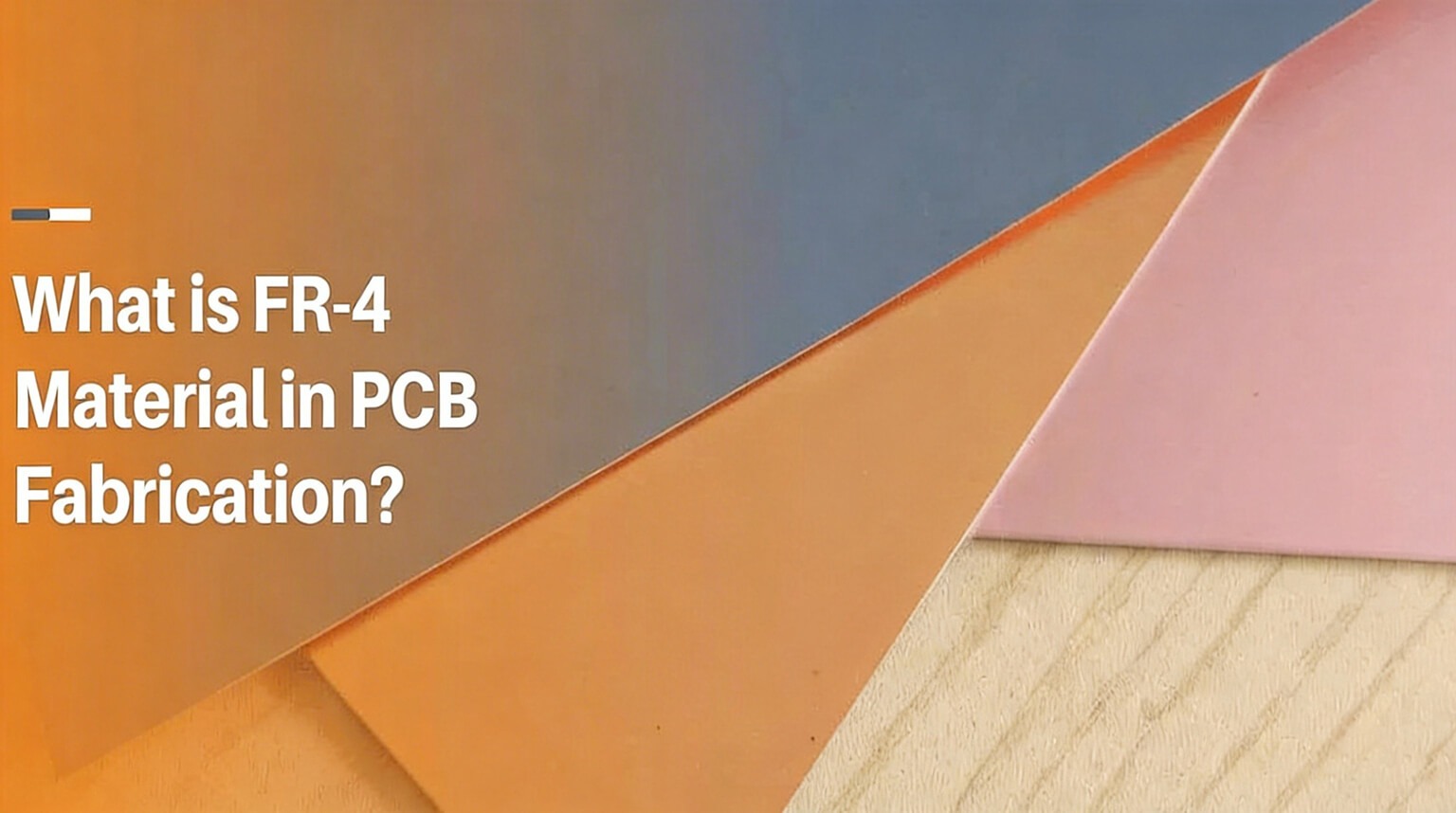
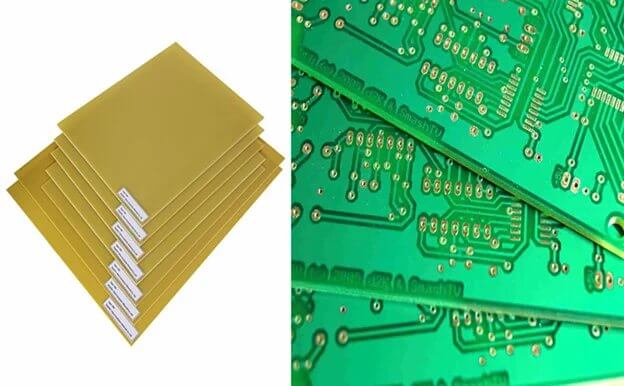
FR-4 (sometimes written as FR4) is a widely used material for PCB. It’s a composite made by combining woven fiberglass cloth with flame-retardant epoxy resin, giving it both strength and electrical insulation.
The name “FR-4” comes from:
- FR – short for Flame Retardant, meaning the material resists burning and can self-extinguish if ignited.
- 4 – originally a NEMA designation, often associated with its flame-retardant rating. In practice, FR-4 materials typically meet UL 94 V-0 standards, which is one of the strictest flame-retardant ratings for plastics.
In PCB, FR-4 serves three key purposes:
- Electrical insulation and structural support – FR-4 isolates copper traces and component leads, preventing short circuits. At the same time, it acts as the PCB’s backbone, supporting all components and copper layers to maintain structural integrity.
- Heat management – Electronic components generate heat during operation. While FR-4 isn’t highly thermally conductive, it helps spread heat across the board, reducing hotspots and allowing heat to be dissipated through heatsinks or enclosures.
- Mechanical protection – FR-4 offers strength and toughness. It withstands high soldering temperatures, assembly pressure, and minor impacts or vibrations, keeping circuits and components safe during manufacturing and everyday use.
Key Components of FR-4
Epoxy Resin: The Glue That Holds It Together
Epoxy resin is the main bonding material in FR-4, making up roughly 40% to 60% of the material’s weight. Its job is to hold the fiberglass layers together while providing electrical insulation and heat resistance.
The type of epoxy resin used affects important properties like glass transition temperature (Tg), heat tolerance, and high-frequency performance.
Common types of epoxy resin include:
- Bisphenol A
- Bisphenol F
- Phenolic-modified epoxy resin
Fiberglass Cloth: The Material’s Skeleton
Fiberglass cloth acts as the reinforcement in FR-4, usually accounting for about 30% to 50% of the weight. It gives the material mechanical strength, toughness, and dimensional stability, preventing deformation or cracking under heat or mechanical stress.
Common fiberglass cloth types include:
- 1080: relatively thin, ideal for slim PCB
- 2116: most commonly used, suitable for standard boards
- 3013: thicker, used for high-strength or thicker boards
Copper Foil: Making FR-4 Ready for PCB
Technically, FR-4 itself doesn’t include copper. In practice, however, FR-4 is often supplied in two forms:
- FR-4 substrate – just the base material without copper
- FR-4 copper clad laminate (CCL) – FR-4 laminated with copper foil, ready for PCB manufacturing
Typically, boards thinner than 0.5 mm are supplied as copper clad laminates, while thicker boards are usually bare FR-4 substrate.
Common copper foil options include:
- By process: electrolytic copper foil (ED), rolled annealed copper foil (RA)
- By thickness: 1 oz (~35 μm), 2 oz (~70 μm), 3 oz (~105 μm)
FR-4 Performance at a Glance
Tg (Glass Transition Temperature) – The Most Critical Factor
Tg is the temperature where FR-4 starts to soften and lose stiffness. Beyond this point, its mechanical strength and insulation drop, and the board may deform. Tg essentially sets the PCB’s heat tolerance and safe operating temperature.
- Standard FR-4: Tg ≥ 130°C, good for general electronics, standard soldering (reflow 220–240°C), operating temperature ≤120°C
- Mid-Tg FR-4: Tg ≥ 150°C, for slightly hotter applications like automotive electronics, reflow 240–260°C, operating ≤140°C
- High-Tg FR-4: Tg ≥ 170°C, for high-power equipment, reflow 260–280°C, operating ≤160°C
Td (Thermal Decomposition Temperature) – Backup Heat Rating
Td is the temperature at which FR-4 starts to break down and carbonize under heat. Higher Td means the material can tolerate heat longer without aging or damage.
- Standard FR-4: Td ≥ 300°C, handles short-term heat like reflow soldering; long-term high temps accelerate aging
- High-Tg FR-4: Td ≥ 350°C, suitable for higher short-term heat and extended use in hot environments
Td must always exceed the reflow temperature. Otherwise, FR-4 may decompose during soldering, causing delamination or PCB damage.
Dielectric Constant (Dk) & Dissipation Factor (Df) – High-Frequency Performance
Dk affects signal speed and impedance. Lower Dk = faster signal propagation.
Df measures energy loss in an electric field. Lower Df = less signal attenuation.
- Standard FR-4: Dk ≈ 4.2–4.8 (1 MHz), Df ≈ 0.015–0.025; works well for low-frequency or general circuits
- Low-loss FR-4: Dk ≈ 3.8–4.2, Df ≤ 0.015 (GHz range); ideal for WiFi, Bluetooth, and other mid-to-high frequency circuits
How FR-4 Stacks Up Against Other PCB Substrates
| Substrat | Key Traits | Typical Applications | How It Differs from FR-4 |
|---|---|---|---|
| FR-4 | Good insulation, strong mechanical strength, decent heat resistance, excellent cost-performance | Consumer electronics, industrial equipment, general-purpose PCB | Balanced performance and affordability; most widely used |
| Rogers | Excellent high-frequency performance, low signal loss, high heat resistance | High-frequency communication devices (5G, radar, RF modules) | Outperforms FR-4 at high frequencies, but 5–10× more expensive |
| PTFE | Outstanding high-frequency performance, corrosion-resistant, excellent insulation | High-end RF equipment, military, aerospace | Superior performance, very costly, and more difficult to process |
| PI (Polyimide) | Flexible, heat-resistant, lightweight | Flexible PCB (foldable phones, wearables) | Much more flexible than FR-4, but lower rigidity and higher cost |
| Paper-based (FR-1 / FR-2) | Low cost, average insulation, limited heat resistance | Simple electronics (toys, basic remote controls) | Lower performance than FR-4; gradually being replaced |
How FR-4 Copper Clad Laminates Are Made
1. Preparing the Raw Materials
The first step is selecting and preparing the core materials: epoxy resin, fiberglass cloth, and copper foil. Proper treatment at this stage ensures the quality of the final laminate.
- Epoxy resin: Choose high-purity resin, mix in curing agents and flame retardants as needed, and ensure a uniform solution.
- Fiberglass cloth: Select the right type, then degrease and dry it to remove impurities and moisture for better bonding with the resin.
- Copper foil: Use foil with a smooth surface and consistent thickness. Surface treatments like roughening or passivation improve adhesion and prevent delamination.
2. Resin Impregnation and Drying
The fiberglass cloth is soaked in the prepared epoxy solution, allowing it to fully absorb the resin. The sheets are then dried to remove moisture and solvents, forming prepreg (PP sheets).
3. Lay-Up: Stacking Layers
Next, the prepreg sheets and copper foil are stacked according to the desired thickness and layer count:
- Single-layer FR-4: Copper foil + prepreg + copper foil (double-sided)
- Multilayer FR-4: Alternate layers of prepreg and copper foil. Inner-layer PCB with pre-etched circuits can be inserted to form multilayer laminates.
4. Hot Press Lamination
This is the most critical step. The stacked materials are pressed under heat and pressure to cure the epoxy and bond the layers.
- Temperature: Around 160–180°C to cure the resin and bond fiberglass and copper
- Pressure: 1.5–3.0 MPa to eliminate voids and ensure tight bonding
- Zeit: 60–120 minutes, depending on thickness and layer count
5. Cooling and Cutting
After lamination, the boards are allowed to cool to room temperature. They are then cut into the required sizes, and edges are smoothed to remove burrs or defects.
6. Quality Inspection and Packaging
Every FR-4 laminate undergoes strict checks to ensure it meets performance standards:
- Visual inspection: Look for bubbles, scratches, delamination, or uneven copper
- Dimensional checks: Verify thickness, layer count, and size accuracy
- Electrical tests: Measure insulation resistance, dielectric breakdown voltage, and other key parameters
Once approved, the sheets are carefully packaged to protect them from moisture, dust, and damage during storage and shipping, ensuring they arrive ready for PCB manufacturing.
Abschließende Gedanken
FR-4 is a cornerstone of modern PCB design, offering a well-rounded mix of insulation, mechanical strength, heat resistance, and affordability. Its versatility makes it a go-to choice across consumer electronics, industrial equipment, automotive electronics, and more. Knowing how FR-4 is made and what properties it brings to the table helps engineers, hobbyists, and PCB professionals make smarter material choices and achieve reliable, high-quality boards.
Here at PCBCool, we support both hobbyists and businesses with FR-4 PCB solutions. For commercial partners, we even provide free prototype samples so you can test and evaluate our FR-4 PCB or PCBA before committing to full production.
Häufig gestellte Fragen (FAQ)
Nein, Altium PCB Designer ist kostenpflichtig. Allerdings ist für Neuanwender eine kostenlose 30-tägige Testversion verfügbar.
Ja, Altium ist sowohl für einfache als auch für komplexe Designs, einschließlich Multilayer- und Hochfrequenz-Leiterplatten, ideal.
Loki ist seit 2021 im internationalen Handel und in der Leiterplattenfertigung tätig und verfügt über Erfahrung in der Leiterplattenherstellung, Montage und Kundenkommunikation. Bei PCBCool unterstützt er die Veröffentlichung technischer Inhalte und hilft, Kundenanfragen mit dem zuständigen Account Manager zu verbinden, um eine effiziente Projektverfolgung zu gewährleisten.