
Blog

Estudio de caso: Prototipo Mecánico-Eléctrico de Monitor de Gas GLP

0
Estudio de caso: Prototipo mecánico y eléctrico de monitor de gas GLP

An IoT gas monitor is often seen as an electronics-led product. It usually involves sensors, a wireless module, a battery system, firmware, and data communication. From the outside, the enclosure may look like a secondary part of the design.

This project showed a different side of the problem.

When PS Electronics received the inquiry, we realized that the project was not only about building a circuit board or adding an enclosure after the electronics were defined. The device had to carry the cylinder’s weight, protect measurement accuracy, support a battery-powered wireless system, and remain realistic at prototype quantities.

This case study looks at how PS Electronics mapped out a product realization path from RFQ to buildable prototype, while keeping the next production stage in mind.

Antecedentes del proyecto

The client was an early-stage hardware team targeting household and small commercial LPG users in West Africa. They had a concept, a component direction, and a clear request covering electronics, firmware, structure, prototyping, and manufacturing support.

ArtículoDescripción
ProductoSmart LPG cylinder gas-level monitor
First build3–10 prototypes
Next quote band100–1000 units
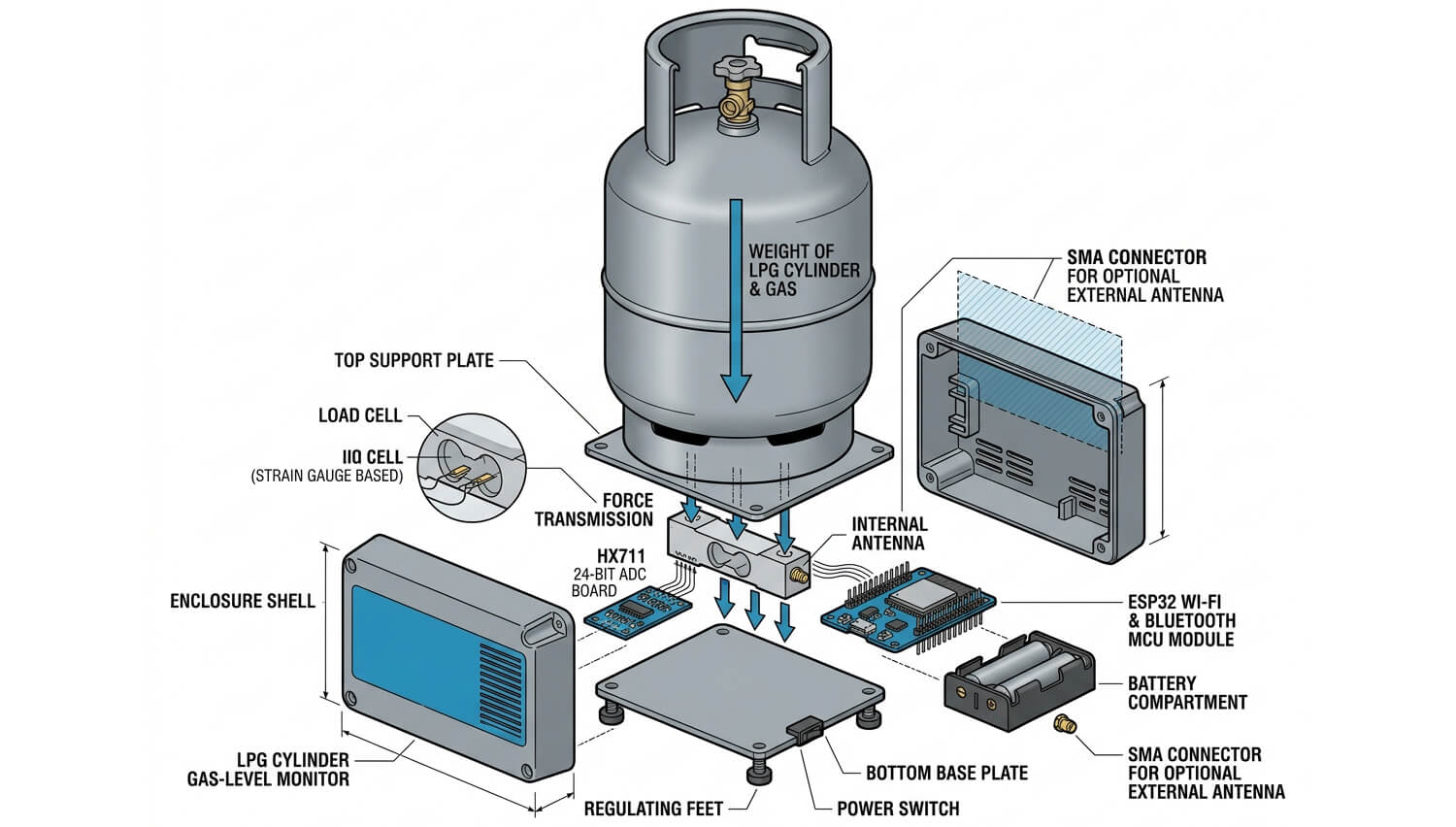
Core stackLoad cell + HX711 + ESP32/C3/S3
Main riskLoad-bearing enclosure affecting measurement accuracy
Needed outcomePrototype route now, production-ready path later

What they did not yet have was a mechanical-electrical architecture that could turn the concept into a buildable device.

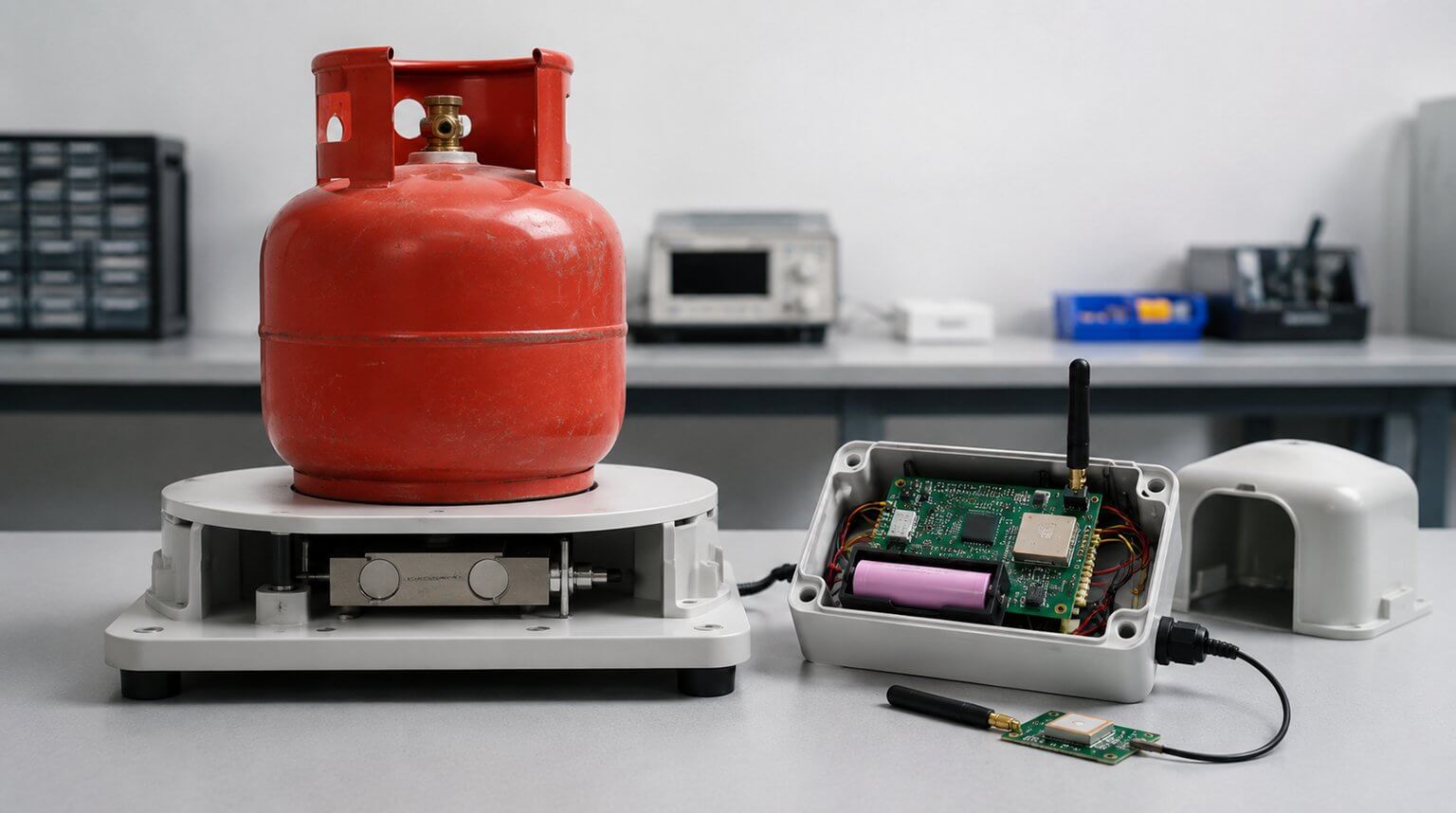
Smart LPG cylinder monitor

Core Challenge

In this product, the enclosure is part of the measuring system. If the sensor seat distorts, or if cable routing and housing geometry add side load, the reading can drift even when the PCB is working correctly.

A second constraint was the business stage. The first build was only 3–10 prototype units, with an explicit request for 100–1000 unit pricing next. This type of project can easily fall into an uncomfortable middle ground. The quantity is too small for a mold-first approach, but the requirement is too serious for a simple sample build. Many suppliers may see it as too early-stage to prioritize, but for the customer, this first build would decide whether the product could move forward.

The first task for PS Electronics was therefore not to quote the PCB, enclosure, and tooling as separate items. It was to define a practical product route.

The shortest way to describe the problem is this:

ConstraintEngineering meaning
Load-cell measurementNo side load, bending, or torsion should enter the sensing path
Cylinder supportThe enclosure had to carry real mechanical load, not only protect electronics
Battery-powered IoTBattery volume, connector direction, antenna clearance, and cable routing became enclosure constraints
3–10 prototypesThe first build had to validate architecture, not just appearance
100–1000 units nextThe design had to keep a production-ready path from the beginning

How PS Electronics Structured the Project

PS Electronics treated the requirement as a system-integration problem led by mechanical definition. Before moving into fabrication, three things had to be locked first.

  1. Separate the Paths

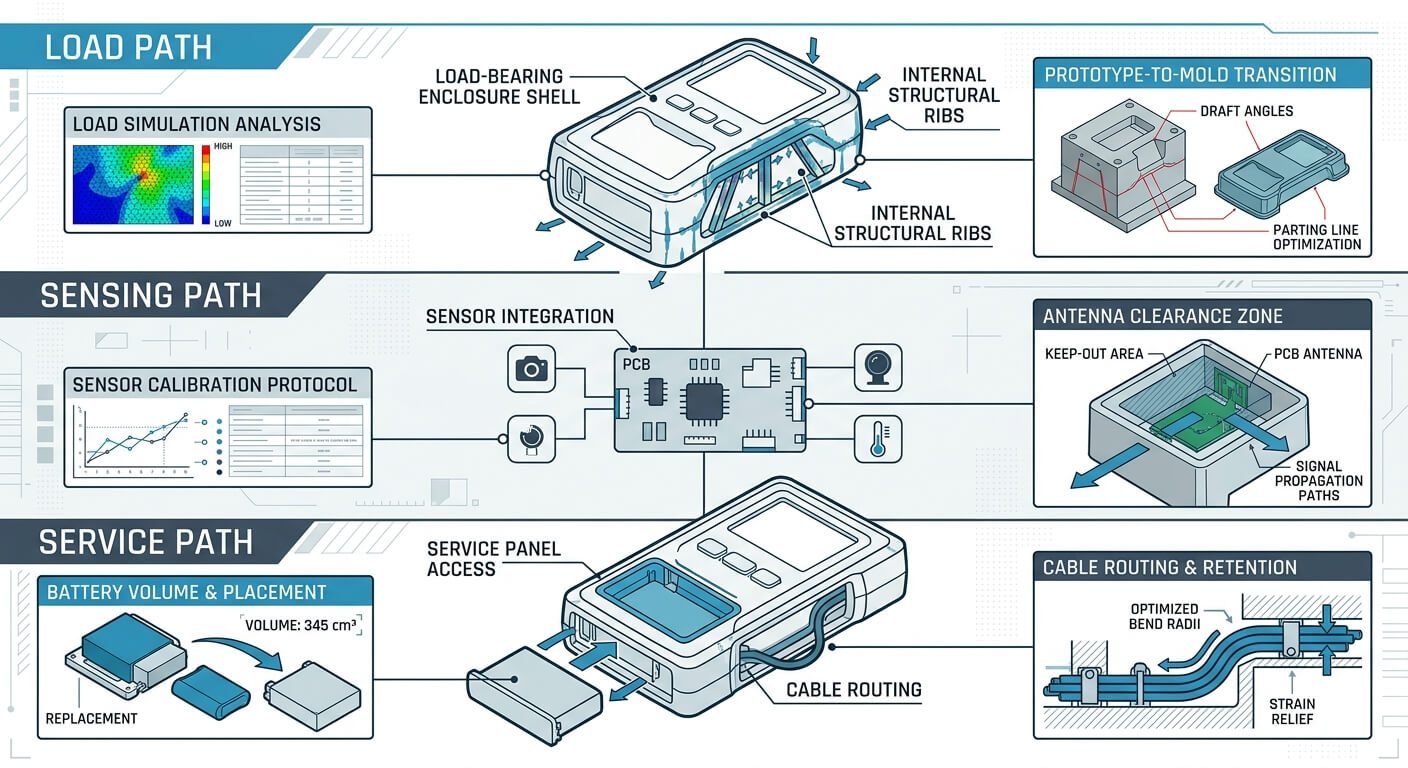
The structure had to be divided into three paths: the load path, the sensing path, and the service path.

Engineering framework diagram
  • The load path had to support the LPG cylinder.
  • The sensing path had to protect the load cell from side load, bending, and torsion.
  • The service path had to allow battery access, cable routing, assembly, and maintenance without disturbing measurement stability.

If these paths merged too early, the prototype could look complete but still produce unstable or misleading weight data.

  1. Use a Staged Prototype Route

At 3–10 units, the target was architecture validation, not production simulation.

CNC parts, printed fixtures, bent supports, or hybrid builds could be more useful than forcing a mold-first decision too early. The first build had to test the structure, load transfer, electronics envelope, and assembly logic before the design moved toward the next quantity level.

  1. Freeze the Electronics Envelope Early

Battery size, PCB position, connector direction, antenna keep-out, and sensor cable routing all affected the enclosure.

If these rules were not defined early, the housing could require late-stage redesign. For this reason, PS Electronics treated the electronics envelope and enclosure structure as one connected design problem from the beginning.

Engineering Logic Behind the Decisions

The key decisions were not arbitrary. They followed standard design rules already used in real load-cell, RF, and molded-part programs.

Engineering basisPractical impact here
Load path disciplineThe enclosure had to keep side force, bending, and torsion away from the sensing path
Off-center loadingReal gas cylinders may not land perfectly centered every time
RF clearanceThe antenna zone and enclosure geometry had to be considered together
Prototype-to-mold pathWall thickness, ribs, draft, and radii had to leave room for later tooling and cost-down

For this project, these rules all pointed to the same conclusion: the enclosure could not be treated as a final shell. It had to carry load, protect the sensor, support the electronics, and remain manufacturable.

Quality Control Had to Follow the Failure Path

For this type of product, quality control had to follow the failure path, not the org chart.

GateWhat gets checked firstWhy it matters
IQCSensor-mount dimensions, support parts, fasteners, sealing materialsStructural tolerance can become weighing error
Control de calidad en procesoLoad-path preservation, cable routing, enclosure fit, assembly orderPoor assembly can add mechanical bias into the reading
Cualquier cosaClosure repeatability, post-assembly stability, RF behavior, loaded responseThe assembled unit has to perform as a complete system

Three additional checks were especially important:

  • Incoming parts must preserve the sensor seat and support datum.
  • Assembly cannot force cables, boards, or battery holders into stress-bearing positions.
  • Final validation has to happen in the closed housing, under representative loading, not only on bench electronics.

What Changed for the Customer

The project moved from a broad hardware inquiry into a clearer product realization path.

BeforeAfter
Broad hardware inquiryClear prototype-to-production route
“Need design + prototype + quote”Clear staged NPI logic
Risk of fragmented vendorsIntegrated enclosure, electronics, and manufacturing coordination
Prototype-only thinkingPrototype route connected to 100–1000 unit production planning
Unclear first-build methodPractical options such as CNC, hybrid build, or mold-led planning could be evaluated based on project stage

That shift matters. The customer no longer has to guess whether the first build should be CNC, hybrid, or mold-led. They no longer have to discover late that the housing is distorting the sensor path.

In this case, the founder stated the requirement directly: “Advise on manufacturing feasibility, provide a quote for producing 3–10 prototypes, and provide optional pricing for 100–1000 units.”

Consideraciones finales

For early-stage hardware products, the first prototype should not only answer “Can it be made?” It should also answer “Can this product move forward without being redesigned from the beginning?”

That was the key lesson in this project. For a weight-based IoT gas monitor, the enclosure was not just a housing, and the PCB was not the only engineering problem. The product had to be understood as a complete system from the start.

In other words, the starting point had to be designed with the endpoint in mind.

Preguntas frecuentes

¿Cuándo debería un proyecto pasar de PCB estándar a HDI?

Cuando el BGA principal, la memoria o la interfaz de alta densidad no se pueden enrutar limpiamente con orificios pasantes convencionales. Si el enrutamiento de escape comienza a forzar capas adicionales, un tamaño de placa más grande o una geometría de traza arriesgada, se debe revisar HDI desde el principio.

P5: ¿Por qué fue necesario realizar una prueba piloto en este caso?

La prueba piloto confirmó si toda la cadena de fabricación podía soportar el diseño, no solo si se podía fabricar una muestra. Le dio al cliente datos reales de rendimiento y entrega antes de comprometerse con la producción mensual.

Andy
Andy | Especialista en Fabricación y Ensamblaje de PCB

Andy es un profesional experimentado en la industria de PCBs con décadas de experiencia en fabricación, ensamblaje y soporte al cliente de PCBs. En PCBCool, lidera el equipo de marketing y ayuda a convertir la experiencia práctica de proyectos en contenido técnico útil para ingenieros, compradores y desarrolladores de productos.

Etiquetas Relacionadas
Compartir