PCB, as the “nervous system” of medical devices, bears the core functions of signal transmission and circuit connection. Their stability and reliability directly determine the clinical safety and effectiveness of medical devices. From implantable pacemakers and in-vitro diagnostic analyzers to AI image diagnostic equipment and portable monitors, every compliant medical device relies on PCB that adhere to high-standard controls.
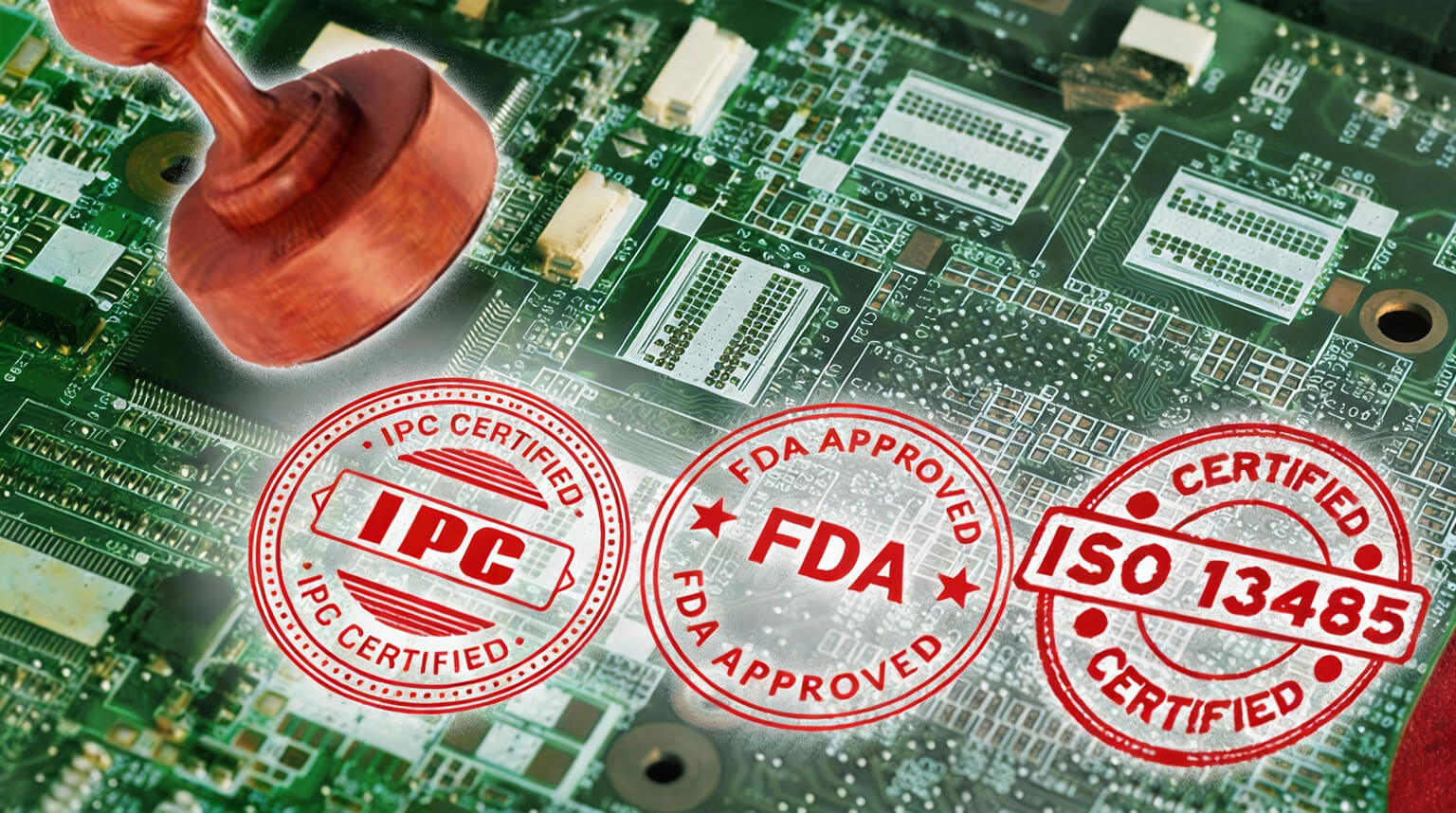
As a QMS (quality management system) standard specifically for the medical device industry, ISO 13485 serves as the core criterion for selecting PCB manufacturers. In this article, PCBCool will explore why choosing an ISO 13485-certified manufacturer for PCB services is crucial for medical device companies, examining four key dimensions: compliance baseline, quality control, risk mitigation, and long-term collaboration.
Unlike PCB used in consumer electronics and industrial control, medical device PCB face more stringent operational environments and regulatory requirements. The uniqueness of the medical device PCB is primarily reflected in the following three areas:
- Extremely High Safety Requirements: Some medical device PCB are used in implantable or life-supporting devices (such as pacemaker PCB or ventilator control PCB). Any issues such as short circuits, signal distortion, or aging failures can directly threaten patient safety.
- Strong Environmental Adaptability: Medical device PCB must withstand complex environments including high temperatures, humidity fluctuations, and electromagnetic interference, while ensuring long-term stable operation. For instance, some implantable PCB must function stably for over 10 years inside the human body.
- Strict Compliance Traceability: Medical device PCB must maintain traceability across the entire lifecycle, from raw material procurement to production and recycling. Each production step must retain verifiable records to comply with global medical device regulations.
Due to these special requirements, medical device PCB cannot follow the production and control standards applied to ordinary PCB. Manufacturers with ISO 13485 certification establish specialized QMS tailored to meet the stringent requirements of the medical device industry.
Global medical device regulations emphasize “supply chain compliance” as a core review criterion, with ISO 13485 certification serving as the authoritative indicator of a manufacturer’s ability to meet QMS standards, which directly impacts market access for the final medical device product.
Leading medical device regulations, including the EU MDR, the US FDA QSR 820, and China’s NMPA, all mandate that the entire medical device supply chain establish a QMS compliant with ISO 13485. As a key component of the supply chain, a PCB manufacturer without ISO 13485 certification cannot pass compliance checks for the final device. Even if the end device company is certified, non-compliant suppliers may result in failure to obtain CE marking, FDA registration, or NMPA certification, preventing global market entry.
Today, when medical device companies select supply chain partners, ISO 13485 certification is a key entry requirement. End-device companies conduct thorough audits of PCB manufacturers to assess the effectiveness and compliance of their QMS. Manufacturers without certification are excluded from consideration. Even for short-term contracts, non-compliant PCB suppliers may lead to regulatory penalties or product recalls, resulting in significant financial losses and reputational damage.
The core value of ISO 13485 certification lies in establishing a quality management framework that ensures full lifecycle and process control.
ISO 13485 requires manufacturers to establish a supplier grading control system. PCB material suppliers (e.g., copper-clad laminates, solder, and solder masks) undergo rigorous evaluations, with priority given to suppliers with compliance certifications. All raw materials must come with batch reports and certificates of compliance, ensuring they meet medical-grade standards (e.g., lead-free, low volatility, biocompatible).
Before warehouse entry, raw materials undergo comprehensive inspections and must be stored and tracked to prevent quality defects in the PCB due to substandard materials. This meticulous management contrasts sharply with the basic inspection practices of standard PCB manufacturers, eliminating the risk of inferior materials entering the production process.
The production of medical device PCB demands high precision, cleanliness, and parameter stability. ISO 13485 certified manufacturers implement specific control processes to meet these requirements:
- Production Environment Control: Cleanrooms meeting ISO 14644 standards are used, with levels of cleanliness classified according to PCB risk levels. Continuous monitoring of airborne particles and microorganisms ensures that contamination is avoided, particularly when producing PCB for sterile medical devices.
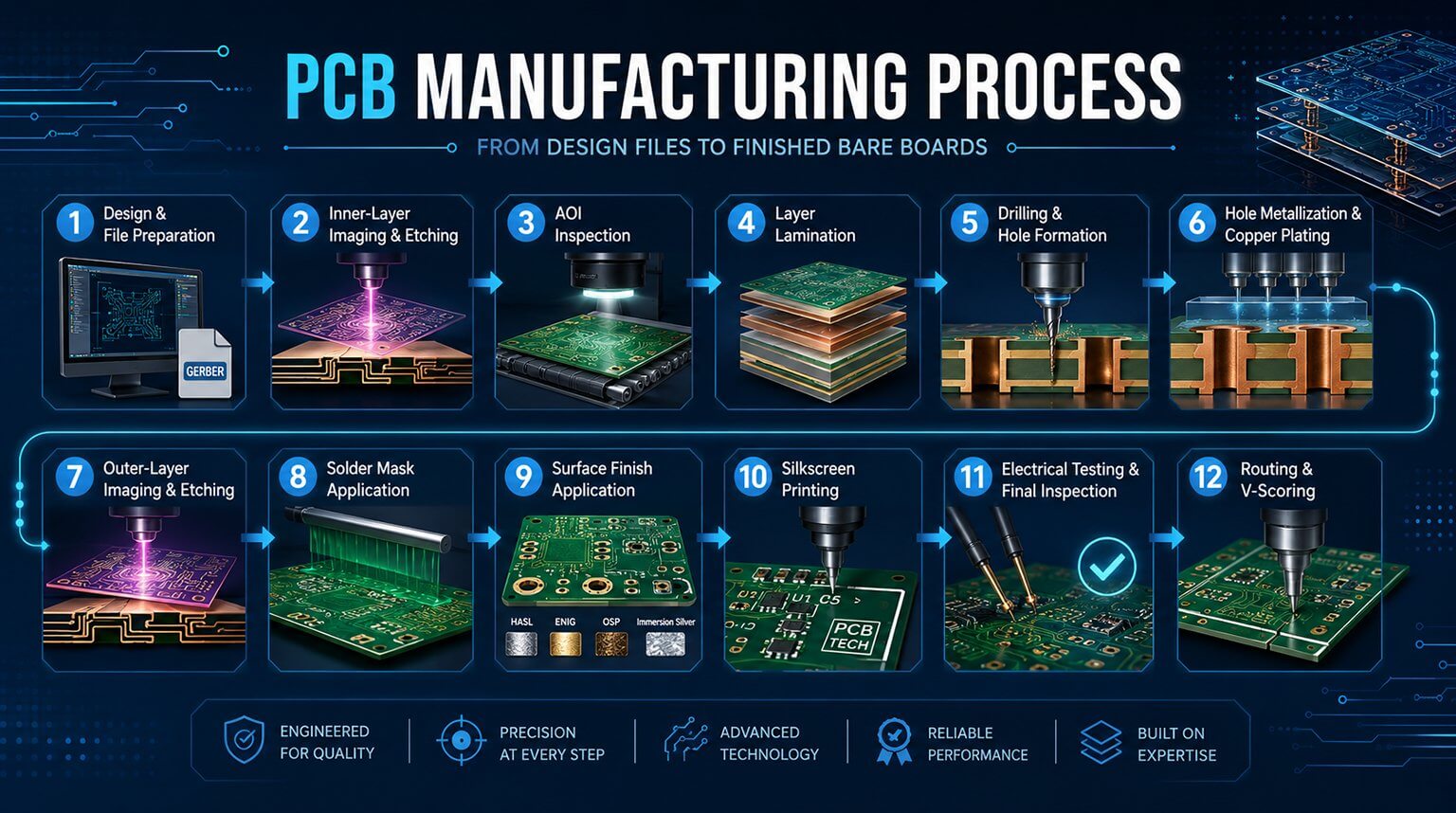
- Process Control: Standard operating procedures (SOPs) are established, and key processes such as etching, drilling, soldering, and masking are strictly monitored. Parameters are controlled with real-time alerts to prevent issues like trace width deviations, pad lifting, or signal interference.
- Personnel Control: Key personnel must possess qualifications in the medical device industry and receive regular training in standards, regulations, and technical skills to ensure compliance and reduce human error.
ISO 13485 requires manufacturers to establish comprehensive inspection and testing systems that exceed the standards for ordinary PCB:
- Elektrische Leistung: Conductivity testing, insulation resistance testing, and voltage withstand testing ensure stable signal transmission and eliminate risks such as short circuits and leakage.
- Mechanical Performance: Bending, tensile, and wear resistance tests ensure that the PCB meets the long-term operational demands of medical devices.
- Umweltanpassungsfähigkeit High/low-temperature cycling, humidity, and electromagnetic compatibility (EMC) tests ensure the PCB performs well in complex medical environments.
- Long-Term Reliability Testing: For high-risk products like implantable PCB, long-term reliability testing is performed, with complete test data retained to ensure compliance with clinical usage requirements.
Risk management in the medical device industry spans the entire value chain, and as a critical component, PCB quality directly affects the reliability of the end product.
ISO 13485 mandates that risk management be integrated into the entire PCB production process, aligning with ISO 14971, the medical device risk management standard:
- Entwurfsphase Risk assessments are conducted during PCB design to identify potential risks (e.g., signal interference, aging failures, dimensional deviations) and preventive measures are implemented.
- Production Process: A risk monitoring mechanism is in place to identify process deviations or equipment failures, with corrective and preventive actions taken promptly.
- Post-Delivery: Feedback is tracked, and adverse event data is analyzed for risk assessment, allowing continuous improvement of production processes and reduced failure risks.
ISO 13485 requires manufacturers to establish comprehensive traceability systems, ensuring that PCB products are traceable from raw material procurement through production, inspection, testing, warehousing, and delivery.
Each batch of PCB is traceable to its corresponding raw material batch, production equipment, operators, and inspection records. In case of quality issues, defective products can be quickly located and recalled, minimizing losses and recall scope.
Additionally, complete traceability records help meet regulatory audits, avoiding penalties for missing traceability—an advantage that standard PCB manufacturers cannot offer.
ISO 13485 certified manufacturers maintain full compliance documentation, including quality manuals, procedural documents, production records, inspection reports, risk management reports, and supplier audit records. These documents simplify supplier audits, reducing costs and ensuring compliance during product registration and audits.
Choosing an ISO 13485 certified PCB manufacturer is not just about purchasing products, but rather about establishing a long-term, compliant partnership that empowers end-device companies in multiple ways.
As medical device technology rapidly evolves, new products such as AI-driven medical devices, 3D printed instruments, and minimally invasive equipment continue to emerge. These products place higher demands on PCB miniaturization, precision, and reliability. ISO 13485 certified manufacturers, with their flexible quality systems, can optimize PCB design and manufacturing processes based on the specific needs of end-device companies, ensuring that custom products remain compliant and reliable. For example, for AI medical devices requiring high-speed signal transmission, PCB routing processes are optimized to avoid signal interference. For implantable devices requiring miniaturization, micro-PCB are developed while ensuring long-term stability.
Global medical device regulations and the ISO 13485 standard are continuously evolving. For instance, ISO 13485:2025 introduces provisions for digital controls and AI, while the EU MDR is refining supply chain compliance requirements. ISO 13485 certified manufacturers stay abreast of regulatory changes, adjusting their quality systems and production processes to ensure their PCB consistently meet the latest compliance standards. End-device companies working with these manufacturers can avoid the extra burden of tracking compliance changes in the supply chain, focusing instead on core product development and production, thereby mitigating compliance risks from regulatory updates.
A medical device brand’s credibility stems from the safety and compliance of its products. By choosing an ISO 13485 certified PCB manufacturer, companies can demonstrate to regulators, healthcare providers, and consumers that the core components of their products have undergone rigorous quality controls and are reliably safe and effective. This compliance endorsement not only enhances market recognition but also strengthens competitiveness, helping companies expand their global market reach and build a professional, compliant brand image.
Not all manufacturers that claim to have ISO 13485 certification genuinely meet the required control standards. When selecting suppliers, end-device companies should conduct the following checks:
Ensure that the certification was issued by an accredited body (e.g., TÜV, SGS, CQC) and is still within its validity period. The authenticity of the certification can be verified on the certifying body’s website to avoid selecting a manufacturer with invalid certifications.
Perform on-site inspections to verify how the manufacturer’s quality system is implemented. Focus on inspecting the production floor, inspection labs, traceability systems, and compliance documents to ensure that the quality management system is operational and not just theoretical.
Prioritize selecting manufacturers with experience in producing medical device PCB and a clean track record of no major quality complaints or violations. By reviewing their past projects and client feedback, you can assess their reliability and compliance.
For medical device companies, choosing an ISO 13485 certified manufacturer for PCB services means selecting a supply chain partner that guarantees compliance, quality control, and risk mitigation. This is not only a necessary step to meet global regulatory requirements and avoid market entry risks but also a long-term strategy to ensure product safety and enhance brand competitiveness.
If you are seeking professional PCB manufacturing, assembly, or full product assembly services for medical devices, PCBCool is your ideal partner. We are ISO 13485 certified, with five global factories and extensive experience in medical projects. We are committed to providing the highest standard of quality assurance and comprehensive support for your products.